
Grubby AI makes a tempting promise: paste AI-generated writing, click humanize, and get text that looks more natural to readers and less obvious to AI detectors. That sounds useful, especially if you write essays, technical explainers, blog drafts, or research-style content with help from ChatGPT or other AI tools. But in 2026, the real question is not whether Grubby AI can rewrite text. The real question is whether it can survive modern AI detectors consistently.
For this Grubby AI review 2026, we tested Grubby AI with two practical content types: technical content and academic / essay-style writing. Then we checked the humanized outputs with GPTZero, Originality AI, and ZeroGPT. We also looked at pricing and compared the workflow with Ryter Pro as a more flexible alternative for users who need to humanize AI content without relying on one narrow bypass mode.
Quick Verdict
- Grubby AI performed well in GPTZero and Originality AI for technical content, but ZeroGPT still flagged that same output as 100% AI.
- Academic / essay-style content performed poorly overall, with Originality AI and ZeroGPT both marking it as 100% AI.
- The results show strong detector disagreement, so one clean score is not enough to trust the output.
- Grubby AI may be useful for quick rewrites, but important writing still needs human editing and multi-detector review.
- Ryter Pro is a stronger alternative if you want a broader humanize AI workflow for rewriting, editing, and checking content quality.
What Is Grubby AI?
Grubby AI is an AI humanizer designed to rewrite AI-generated text so it sounds more natural and less detectable. Like many AI bypass tools, it focuses on changing sentence structure, rhythm, transitions, and phrasing while keeping the original meaning mostly intact.
The platform is often positioned for students, writers, marketers, and anyone who wants ChatGPT-style writing to read more like human-authored content. Its appeal is simple: it offers a fast rewrite workflow without requiring users to manually edit every sentence from scratch.
What Grubby AI Claims to Help With
- Humanizing AI-generated essays and articles
- Reducing robotic wording and predictable sentence patterns
- Improving readability after AI drafting
- Helping content pass selected AI detectors
- Rewriting text for school, work, and publishing use cases
Why We Tested Grubby AI
Humanizer tools often advertise high pass rates, but detection performance can change depending on the content type, rewrite mode, and detector being used. A tool may pass GPTZero but fail ZeroGPT. It may look clean in Originality AI but still feel awkward to a reader. That is why a realistic review needs more than one sample and more than one detector.
For this test, we used two common content categories. Technical content represents structured, factual writing with lower emotional variation. Academic / essay-style content represents formal argument writing, where detectors often notice repeated transitions, balanced claims, and predictable paragraph shapes.
Testing Methodology
We used a simple testing process modeled on real user behavior:
- Prepare AI-style source content in a common writing category.
- Run the text through Grubby AI to humanize the output.
- Check the humanized result with GPTZero, Originality AI, and ZeroGPT.
- Compare detector scores across content types instead of relying on one result.
- Review pricing and workflow fit against Ryter Pro as an alternative.
For readability, lower AI percentages are better. A result close to 0% AI means the detector sees the text as mostly human. A result near 100% AI means the detector strongly flags the text as AI-generated.
Test 1: Technical Content
The first test used technical content. This kind of writing is usually easier for humanizers because it is factual, structured, and less dependent on personal voice. If a humanizer performs well anywhere, technical content is often the place where it has the best chance.
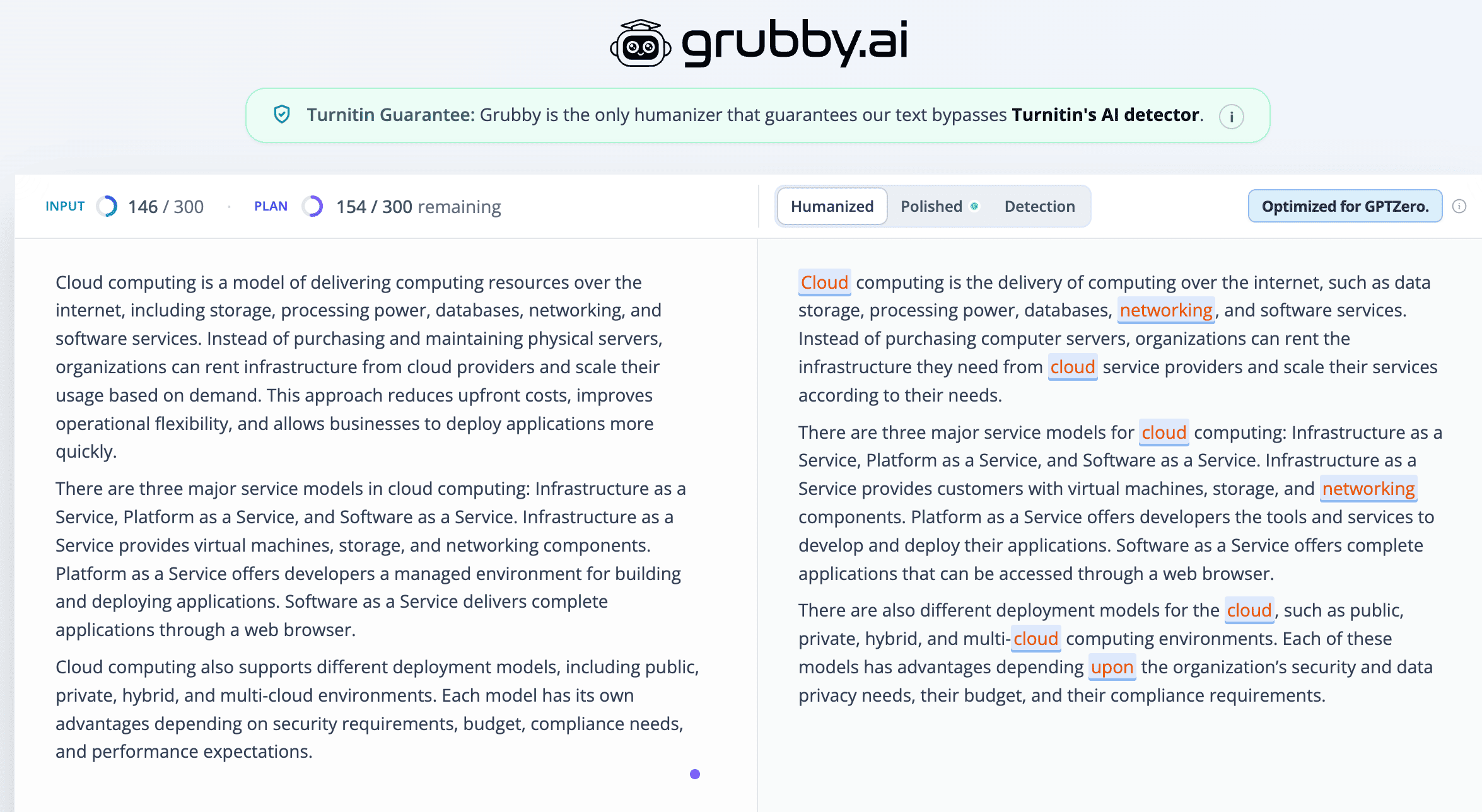
| Detector | AI Score | Result |
|---|---|---|
| GPTZero | 0% AI | Pass |
| Originality AI | 5% AI | Pass |
| ZeroGPT | 100% AI | Fail |
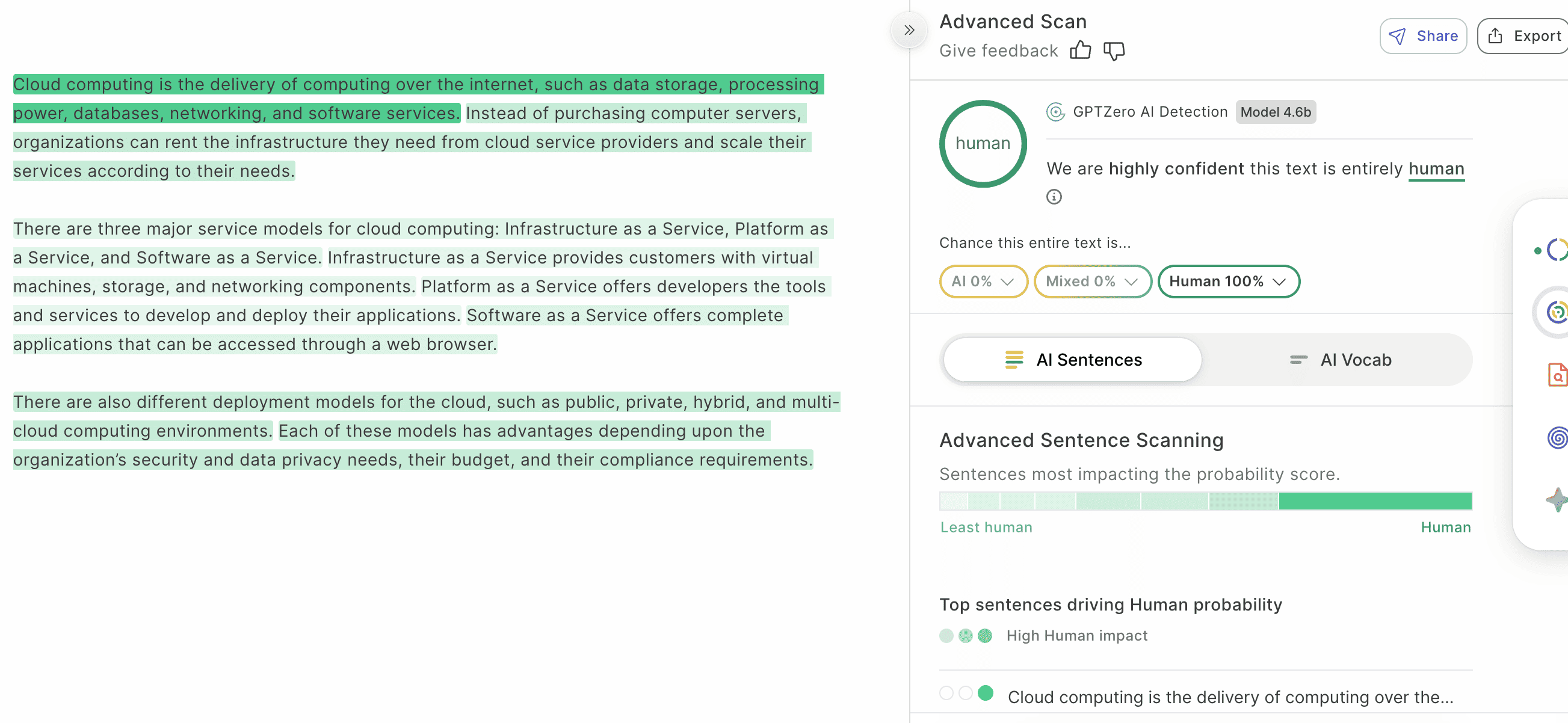
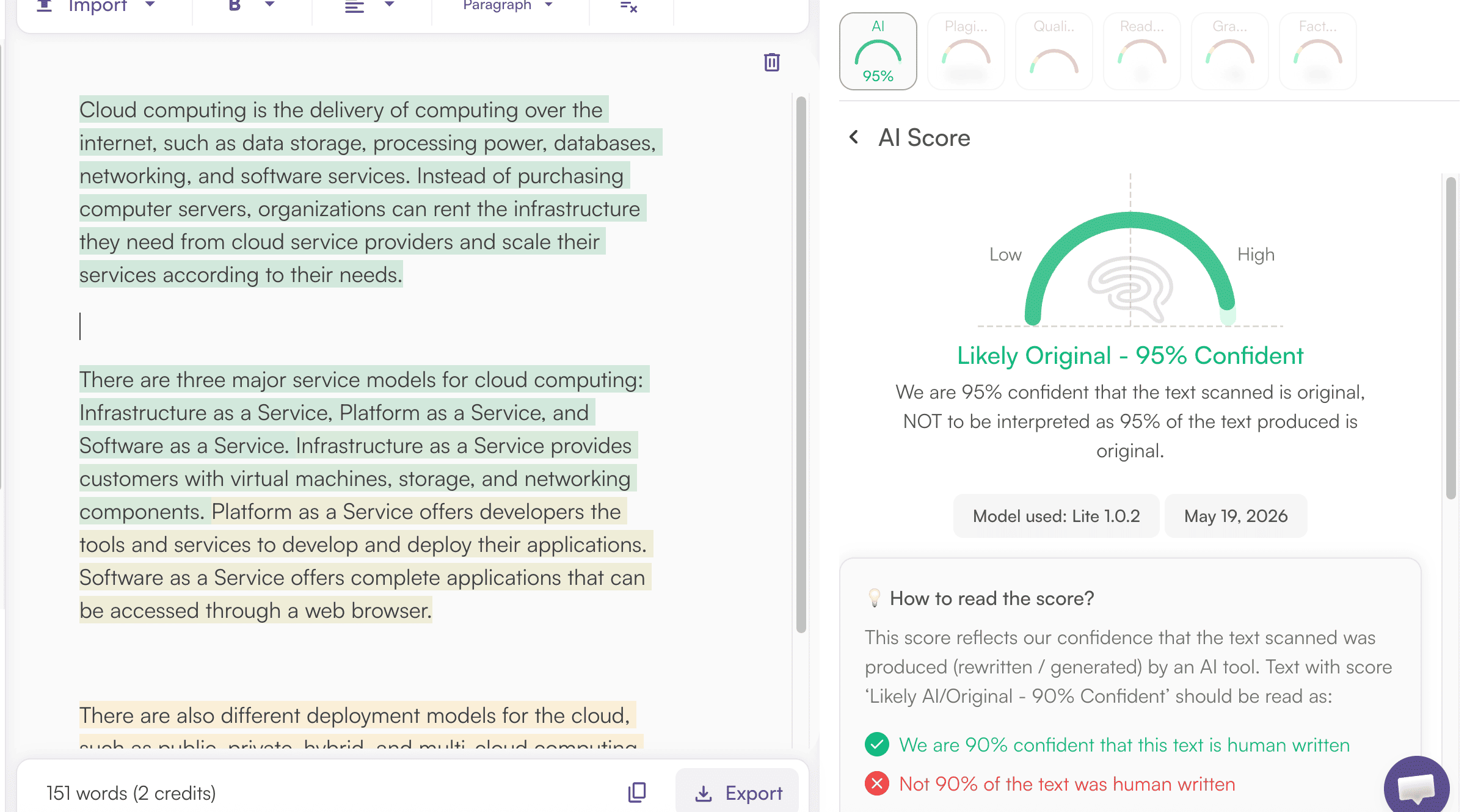
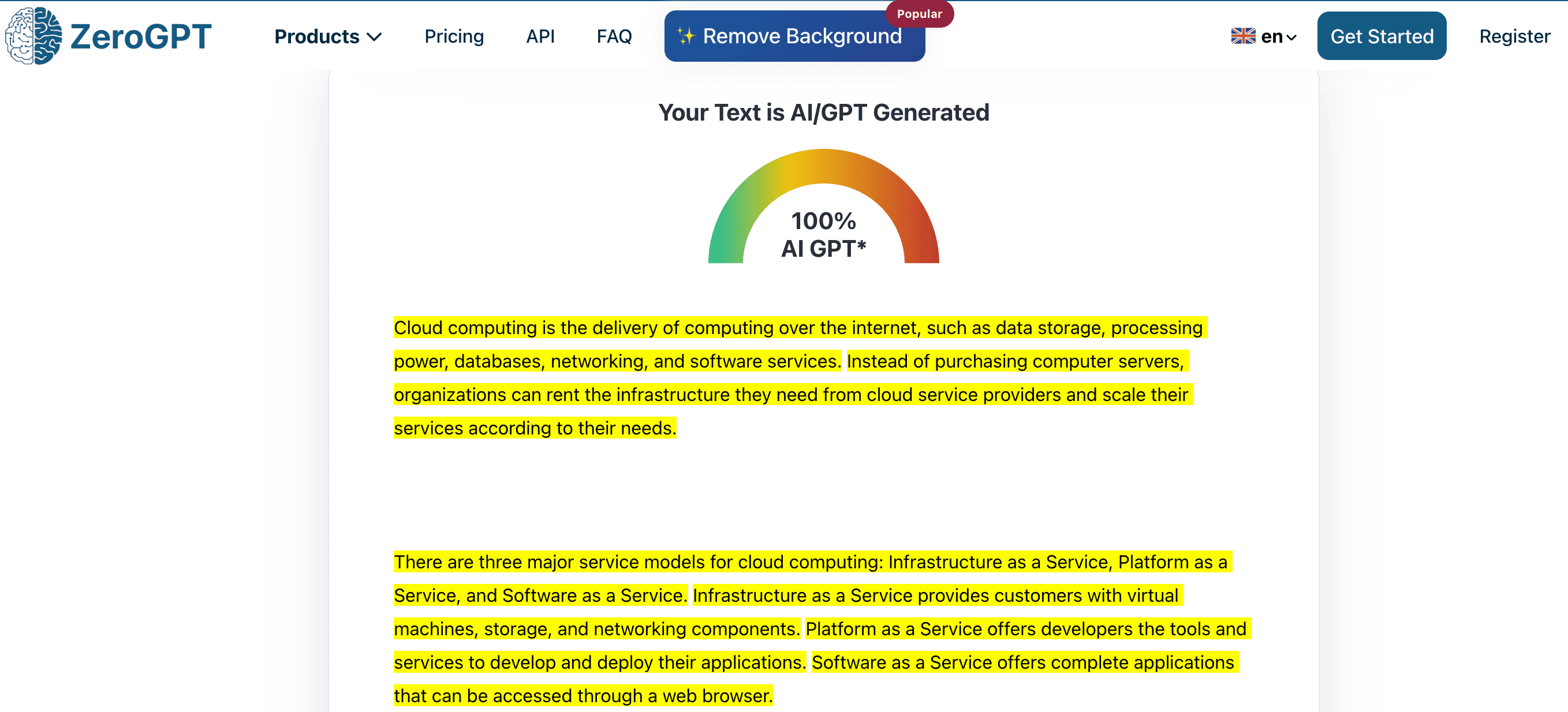
Technical content verdict: Grubby AI did very well in GPTZero and Originality AI, but ZeroGPT completely rejected the same output. This is a classic detector-disagreement result. If your evaluator only uses GPTZero, the output may look safe. If they use ZeroGPT, it may fail immediately.
Test 2: Academic / Essay Style
The second test used academic / essay-style content. This category is important because many people use AI humanizers for essays, discussion posts, reports, and formal writing. It is also a harder test because academic writing has recognizable AI patterns: balanced phrasing, predictable topic sentences, and smooth but generic transitions.
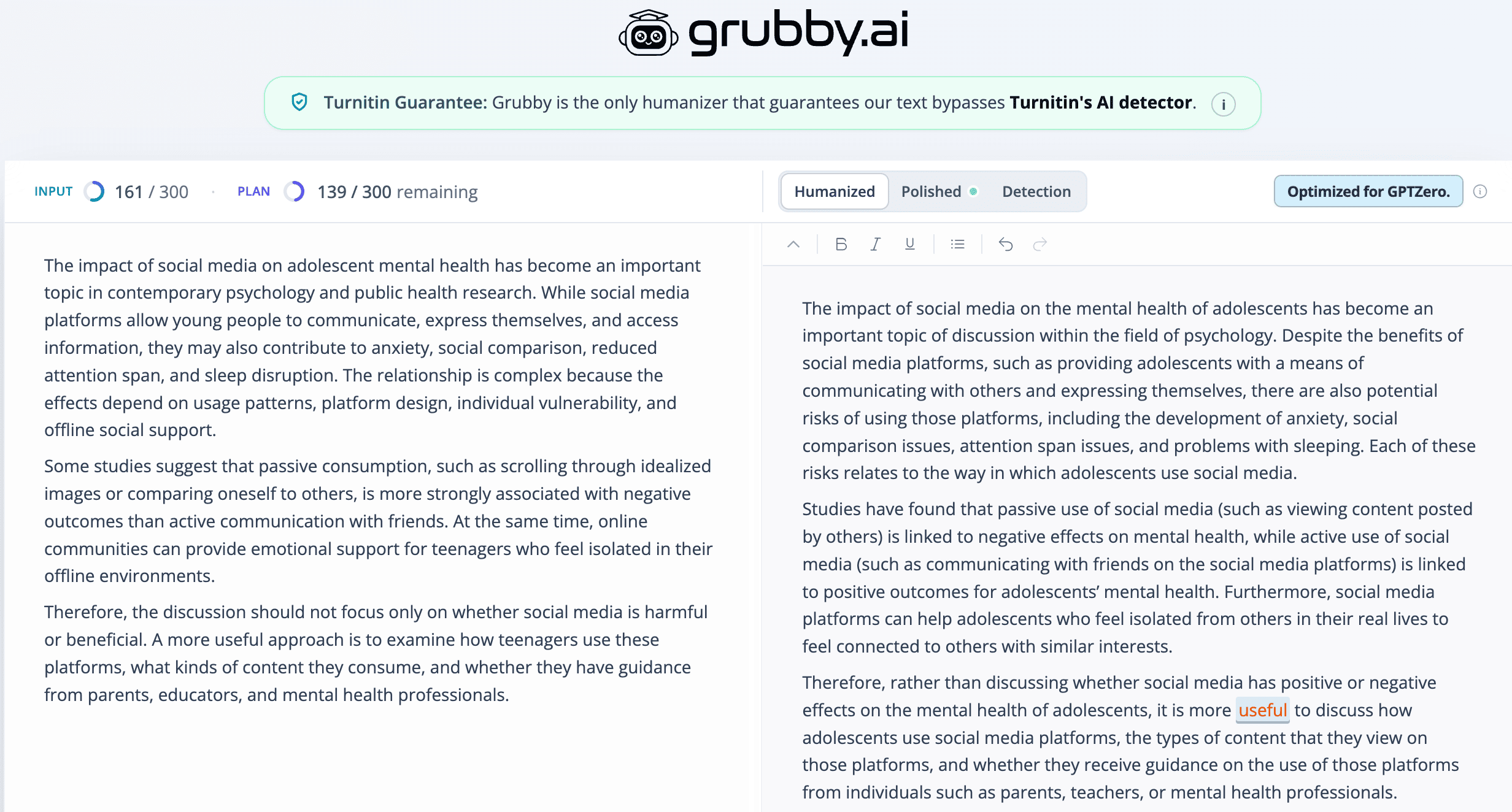
| Detector | AI Score | Result |
|---|---|---|
| GPTZero | 10% AI | Pass |
| Originality AI | 100% AI | Fail |
| ZeroGPT | 100% AI | Fail |
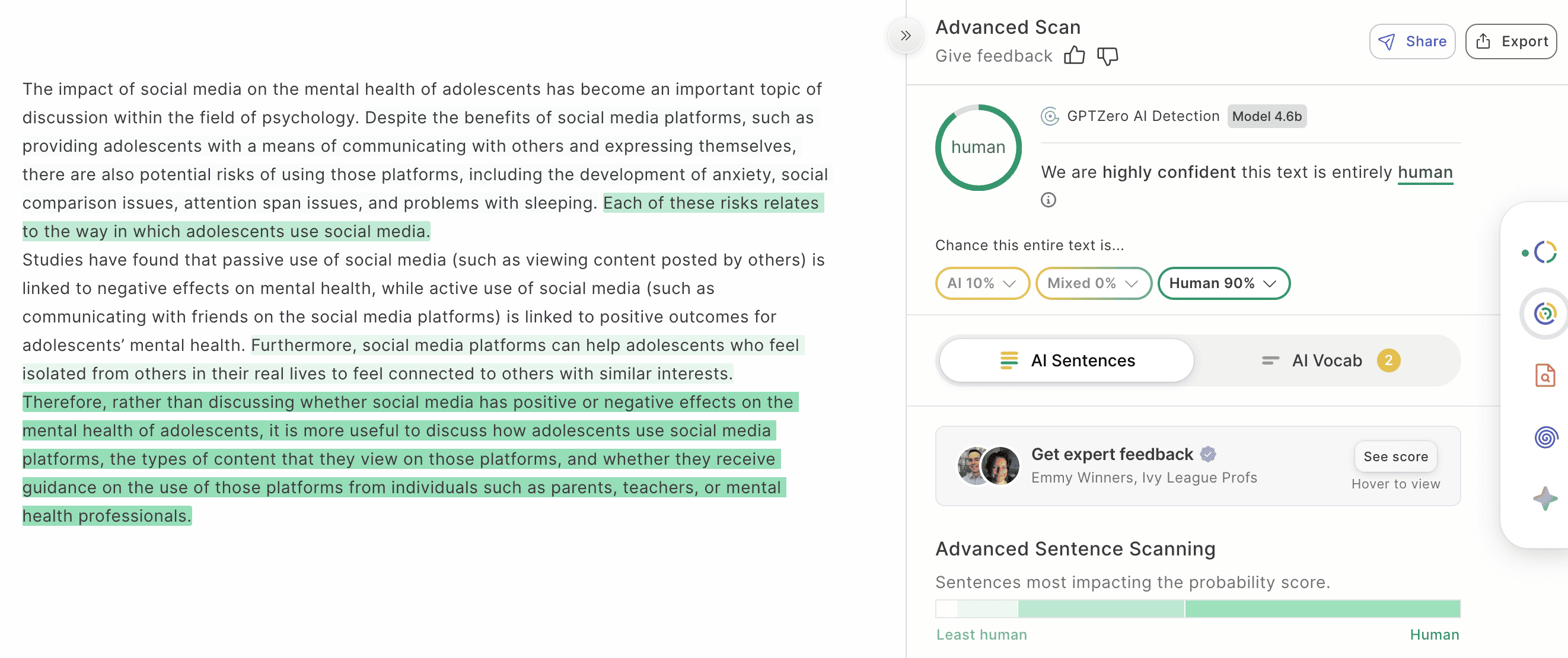
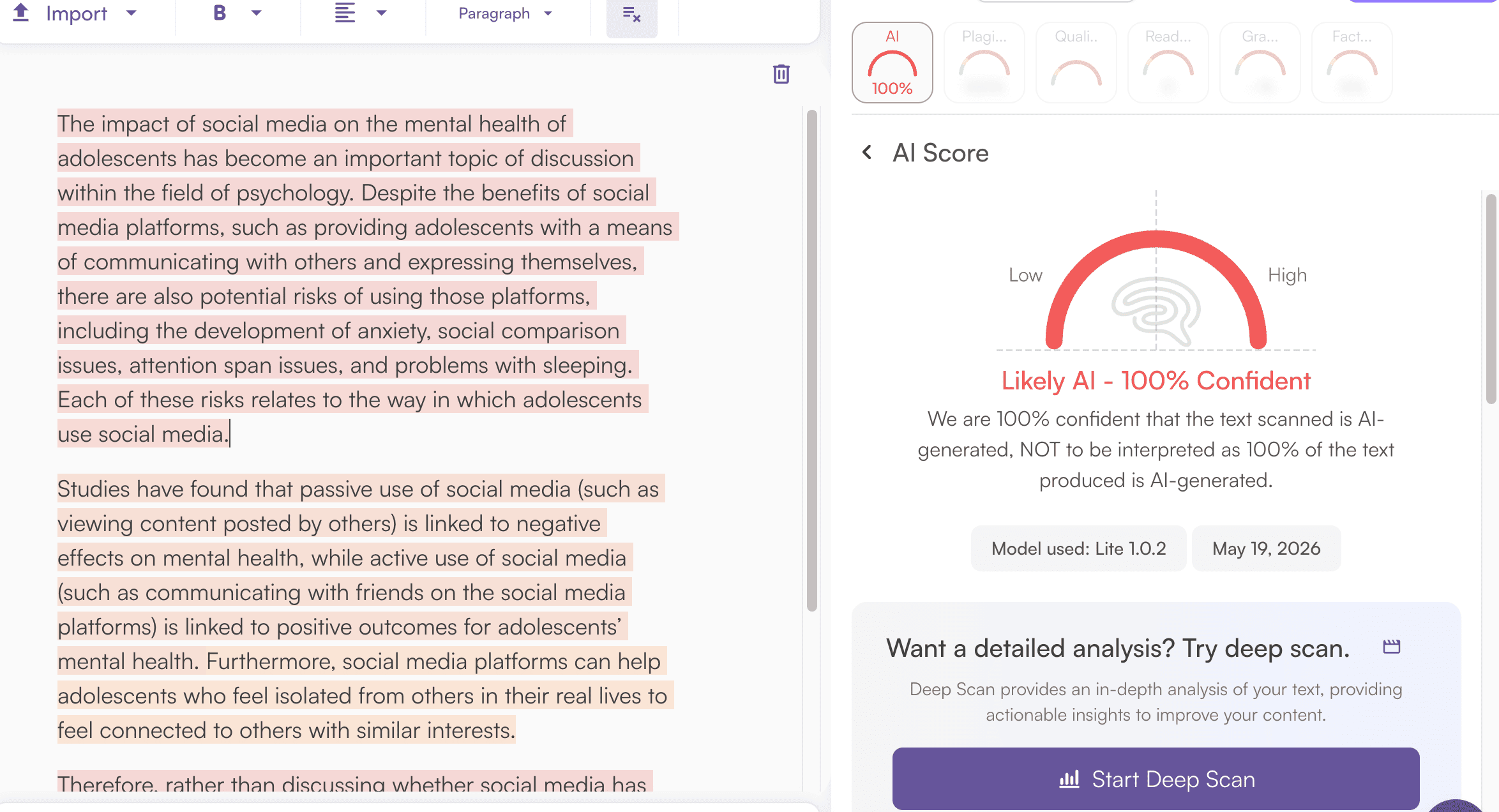
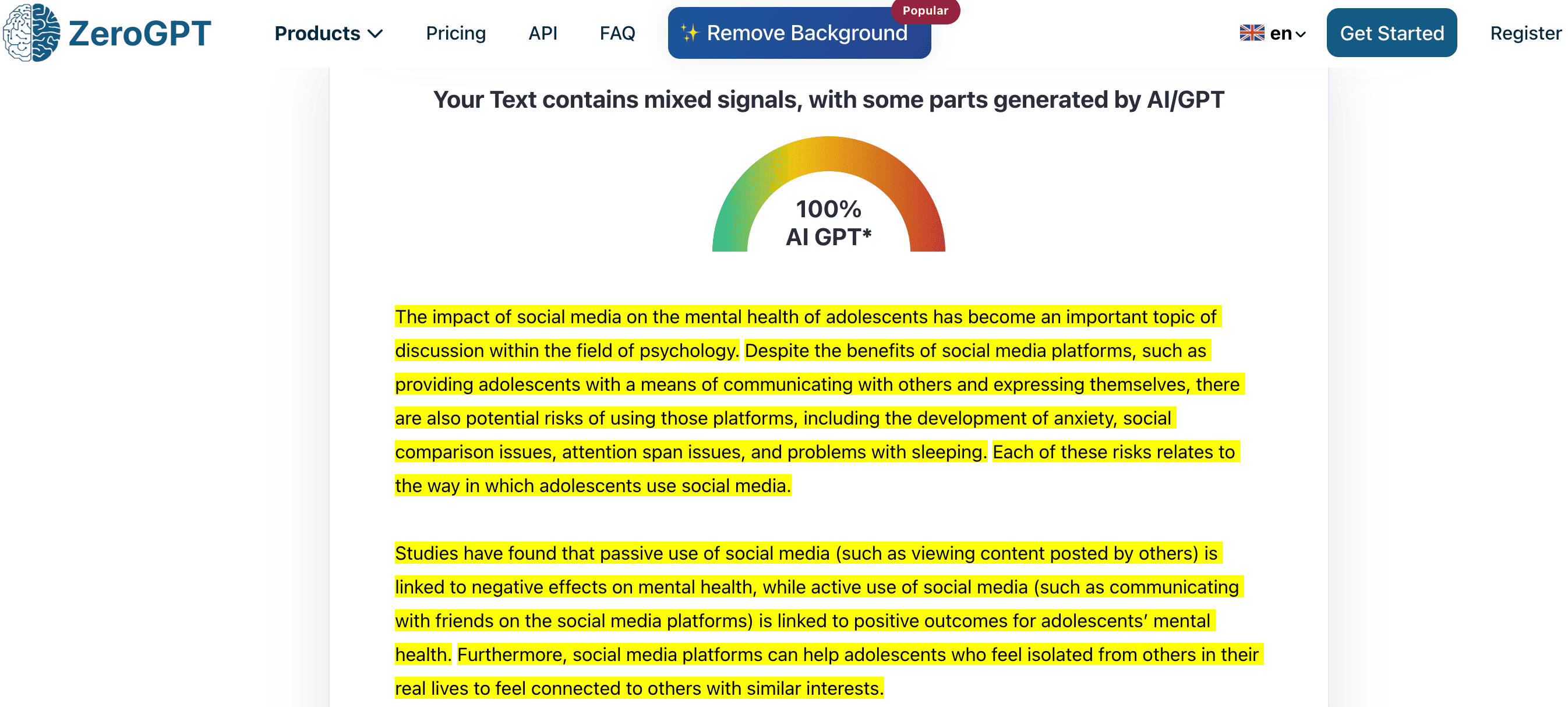
Academic content verdict: This was a weak result for Grubby AI. GPTZero gave it a pass, but both Originality AI and ZeroGPT returned 100% AI. For essays or formal submissions, that is too risky to treat as reliable.
Grubby AI Test Results Summary
| Content Type | GPTZero | Originality AI | ZeroGPT | Overall Read |
|---|---|---|---|---|
| Technical Content | 0% AI | 5% AI | 100% AI | Mixed |
| Academic / Essay Style | 10% AI | 100% AI | 100% AI | High risk |
The pattern is clear: Grubby AI can produce strong scores in some detectors, but the results are not stable across tools. Technical content looked excellent in GPTZero and Originality AI, while ZeroGPT still detected it as AI. Academic writing was even riskier because two out of three detectors flagged it at 100% AI.
Does Grubby AI Bypass AI Detection?
Grubby AI can bypass some AI detectors in some cases, but our test does not support treating it as a guaranteed AI detection bypass tool. It performed best against GPTZero in both tests, but Originality AI and ZeroGPT produced much harsher results depending on the content type.
That means Grubby AI may be useful for a first rewrite, but it should not be the final step in your workflow. If the content matters, you should review the meaning, improve sentence variety, remove generic phrasing, and check the draft with more than one detector.
Grubby AI Pricing
Pricing matters because AI humanizers can become expensive quickly if you process essays, articles, or client content regularly. Grubby AI offers paid plans around word limits and access to different humanization modes, but users should compare cost against actual reliability rather than only looking at monthly words.
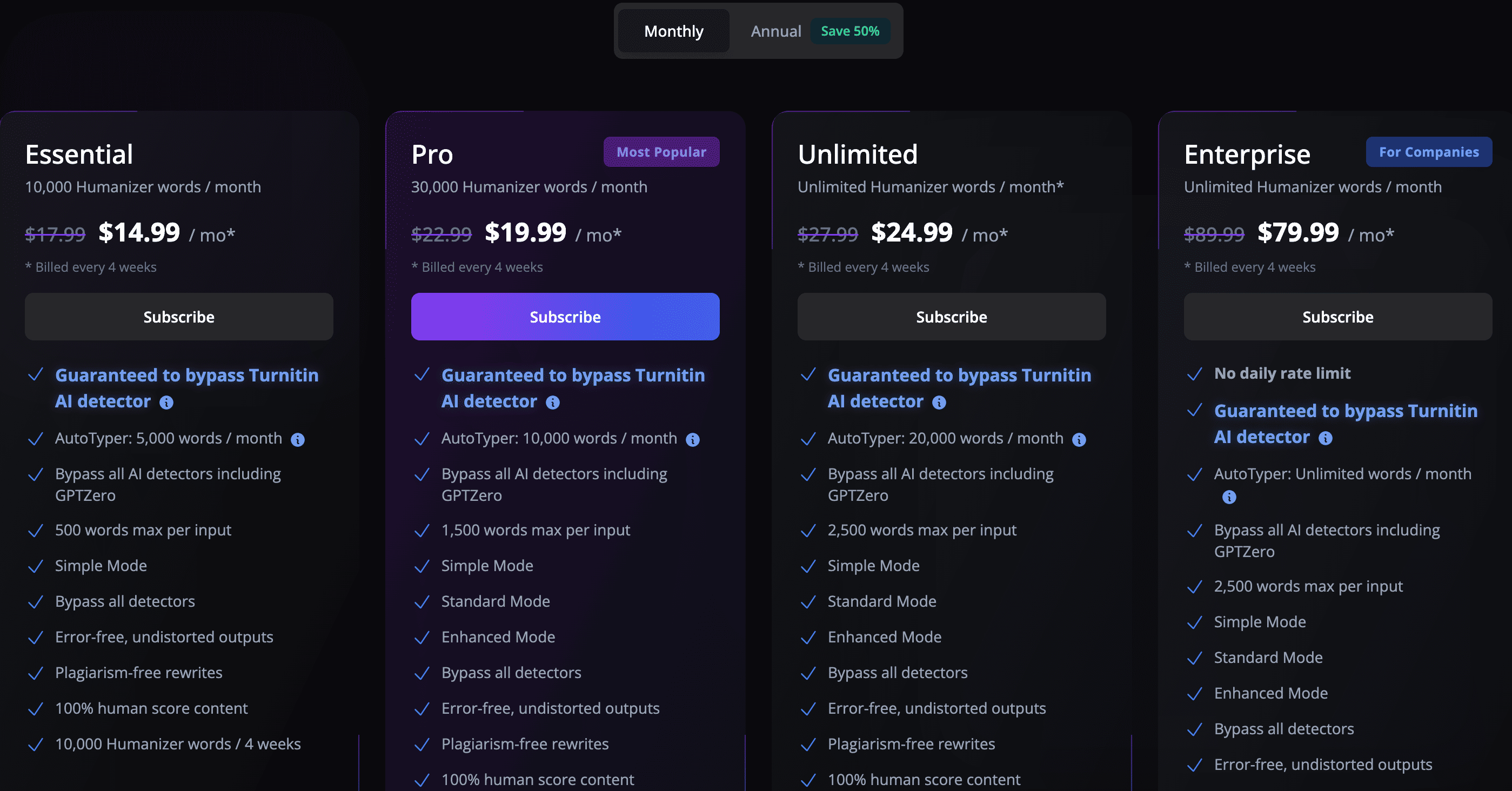
If a tool passes one detector but fails another, the real cost includes extra editing time, repeated rewrites, and separate detector checks. This is where Ryter Pro pricing is worth comparing, especially if you want a practical AI writing workflow rather than paying only for narrow detector-optimized rewriting.
Grubby AI Pros and Cons
Pros
- Simple workflow for quickly rewriting AI-generated text.
- Strong GPTZero results in both of our tests.
- Technical content also performed well in Originality AI.
- Useful for first-pass humanization when you need to remove robotic phrasing.
- Works with common writing categories like technical and academic content.
Cons
- ZeroGPT flagged both tested outputs as 100% AI.
- Academic / essay-style content failed both Originality AI and ZeroGPT.
- Detector performance was inconsistent across tools.
- Users still need manual editing and external checking.
- Pricing value depends heavily on whether the output actually passes the detectors you care about.
Best Grubby AI Alternative: Ryter Pro
If you want a Grubby AI alternative, Ryter Pro is a better fit for users who want a complete humanize AI workflow rather than a single rewrite button. Ryter Pro is designed for rewriting, polishing, and improving AI-generated drafts so the final content reads more naturally to real people, not just to one detector.
The advantage of Ryter Pro is workflow control. Instead of depending on a detector-specific mode, you can use it to improve tone, reduce generic AI patterns, preserve meaning, and prepare content for publishing, study, or professional communication. That matters because detector scores can disagree sharply, as this Grubby AI review shows.
Why Ryter Pro Is a Stronger Fit for Many Users
- Built around practical AI writing and humanization workflows.
- Useful for blogs, essays, emails, product pages, and professional drafts.
- Better suited for iterative editing instead of one-shot rewriting.
- Clearer fit for users who care about readability as much as detector scores.
- Works as part of a broader content process, not only as a bypass attempt.
For users comparing Grubby AI vs Ryter Pro, the key difference is reliability philosophy. Grubby AI focuses on quick humanization. Ryter Pro helps you build a stronger draft that can be reviewed, refined, and trusted by readers.
Who Should Use Grubby AI?
Grubby AI may be useful if you need a fast rewrite and you are testing low-risk content. It performed especially well in GPTZero in our tests, so users focused only on that detector may find it helpful.
However, if you are working on academic content, client work, or anything that may be checked with Originality AI or ZeroGPT, Grubby AI should be used cautiously. A strong score in one detector does not guarantee a safe result elsewhere.
FAQ
Is Grubby AI free?
Grubby AI may offer limited free usage or trial access, but regular writing usually requires a paid plan. Check the current pricing page before subscribing because word limits and features can change.
Does Grubby AI bypass GPTZero?
In our tests, Grubby AI performed well against GPTZero. Technical content scored 0% AI, and academic / essay-style content scored 10% AI.
Does Grubby AI bypass Originality AI?
Not consistently. The technical content scored only 5% AI in Originality AI, but the academic / essay-style content was marked 100% AI.
Does Grubby AI bypass ZeroGPT?
No in our test. ZeroGPT marked both the technical content and academic / essay-style content as 100% AI.
What is the best Grubby AI alternative?
Ryter Pro is a strong Grubby AI alternative for users who want to humanize AI content while also improving readability, tone, and overall writing quality.
Summary
Grubby AI is easy to use and can produce impressive results in certain detectors, especially GPTZero. But our 2026 test shows that its performance is not consistent enough to rely on blindly. Technical content passed GPTZero and Originality AI but failed ZeroGPT, while academic / essay-style content failed two out of three detectors.
If your goal is quick experimentation, Grubby AI may be worth testing. If your goal is a stronger, repeatable writing process, try Ryter Pro. The safest workflow is not just to bypass AI detection. It is to create content that reads clearly, keeps meaning intact, and sounds natural to human readers.