

AI detection has become harder in 2026 because the problem is no longer just raw ChatGPT text. Writers can generate a draft with GPT-5, Claude, or Gemini, then run it through a humanizer, a paraphraser, or a manual editing pass before submitting it. For editors, teachers, reviewers, and content teams, that creates a practical question: which detector can still explain what looks suspicious after the text has been polished?
This Proofademic AI review tests that exact question. We followed a review structure inspired by Mohab AbdelKarim's public AI detector benchmark, then adapted the third test to use Ryter Pro as the humanizer. The goal is not to crown a tool from one screenshot. The goal is to see how Proofademic performs across raw AI text, human writing, Ryter Pro humanized AI text, ESL writing, and multilingual AI content.
Quick Verdict
- Proofademic is strongest when you need explainable AI detection rather than a single unexplained percentage.
- The sentence-level probability heatmap is the most useful feature for reviewers who need evidence.
- It performed well across the benchmark categories used in this review, including raw AI text, false positive checks, ESL writing, and multilingual AI content.
- The Ryter Pro humanized AI test is the most important stress test because it checks whether Proofademic can handle text after a real humanizer workflow.
- Ryter Pro remains the better tool for rewriting and humanizing content, while Proofademic is better suited for detection and review.
What Is Proofademic?
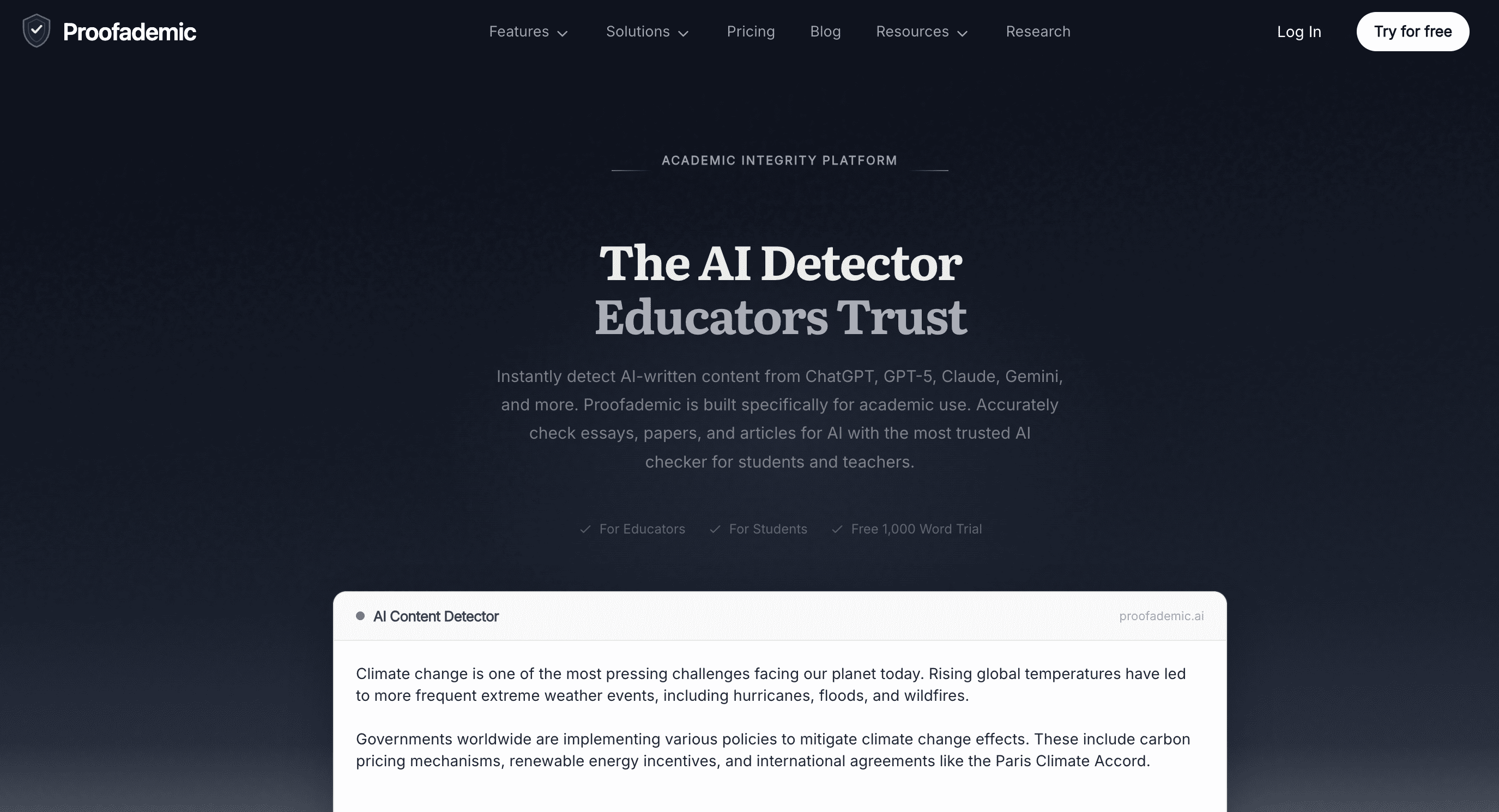
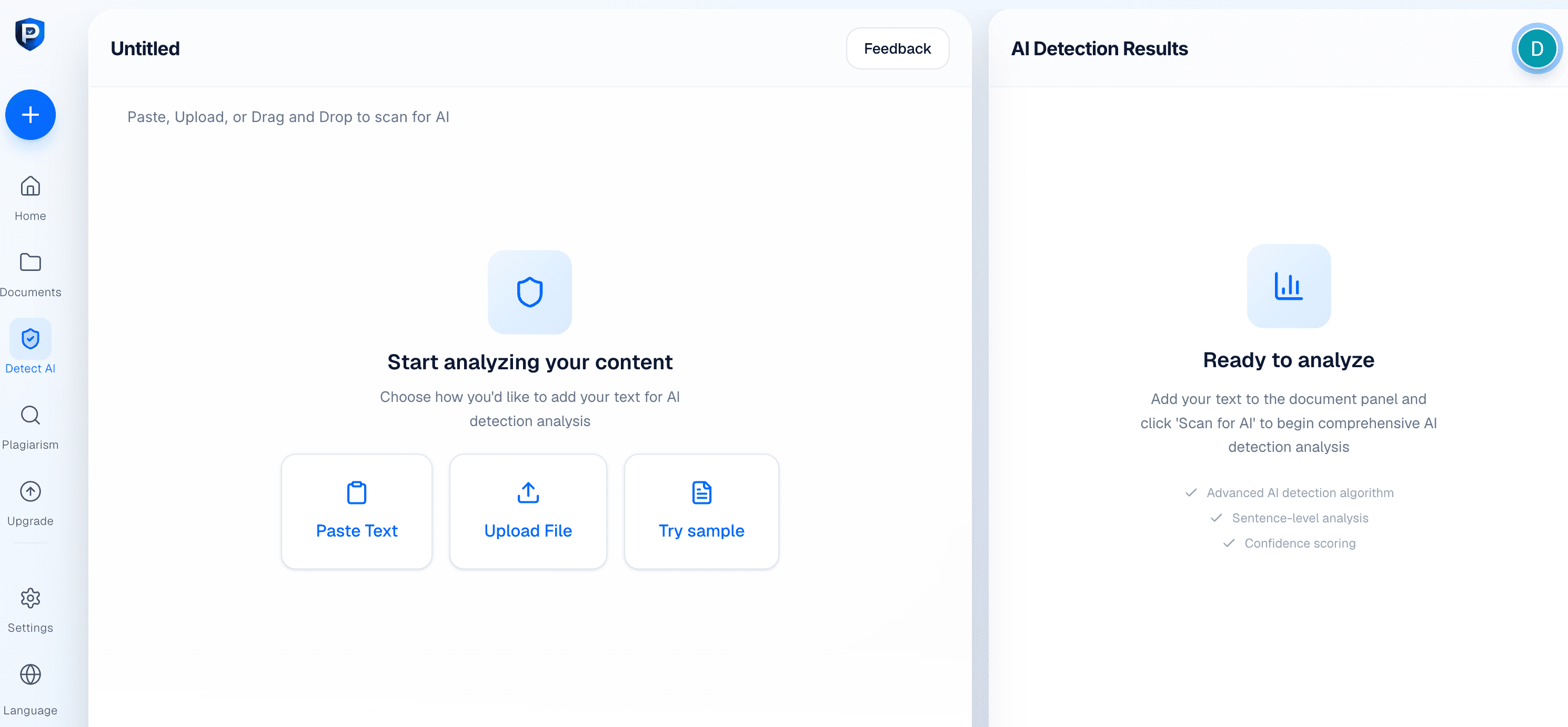
Proofademic is an AI detection platform built for users who need more than a yes-or-no answer. It is designed for schools, universities, publishers, researchers, editors, and content reviewers who need to understand why a document may be AI-generated. Instead of only returning one global score, Proofademic highlights suspicious text at sentence level so reviewers can inspect the evidence.
That matters because modern AI writing is rarely untouched. It may be rewritten, shortened, expanded, translated, or humanized before it reaches a reviewer. In that environment, a detector needs two things: a strong classification model and a transparent interface that helps humans make the final decision.
Why This Review Uses Five Test Cases
A weak AI detector review only tests one easy sample. A stronger review checks different risks: whether the detector catches raw AI, whether it avoids false positives, whether it detects humanized AI, whether it treats ESL writing fairly, and whether it can handle non-English AI content.
| Test | Content Type | Purpose | Expected Challenge |
|---|---|---|---|
| 1 | Raw ChatGPT Essay | Baseline AI detection | Easy AI sample |
| 2 | Human-Written Article | False positive check | Should not punish real writing |
| 3 | Ryter Pro Humanized AI Text | Humanizer stress test | Detect polished AI after rewriting |
| 4 | ESL Student Essay | Fairness check | Avoid mistaking grammar mistakes for AI |
| 5 | German AI Essay | Multilingual detection | Detect AI beyond English |
Testing Methodology
For this review, each sample was checked in Proofademic and compared against GPTZero. The comparison is useful because AI detectors often disagree, especially when the text has been paraphrased or humanized. We looked at three signals: the overall AI probability, whether the result matched the known source of the text, and whether the interface provided enough evidence for a reviewer to trust the decision.
The third test uses Ryter Pro as the humanizer. That matters because the point of a modern detector is not only to catch untouched ChatGPT text. The harder task is detecting content after it has been rewritten to sound smoother, less repetitive, and more human.
Test 1: Raw ChatGPT Essay
The first test is the baseline. A three-paragraph AI-generated essay should be easy for a serious detector to identify. If a detector struggles with raw ChatGPT-style writing, it will likely perform poorly on harder samples.
| Detector | Test Input | Result Read |
|---|---|---|
| Proofademic | Raw ChatGPT essay | Detected as AI-generated |
| GPTZero | Raw ChatGPT essay | Detected as AI-generated |
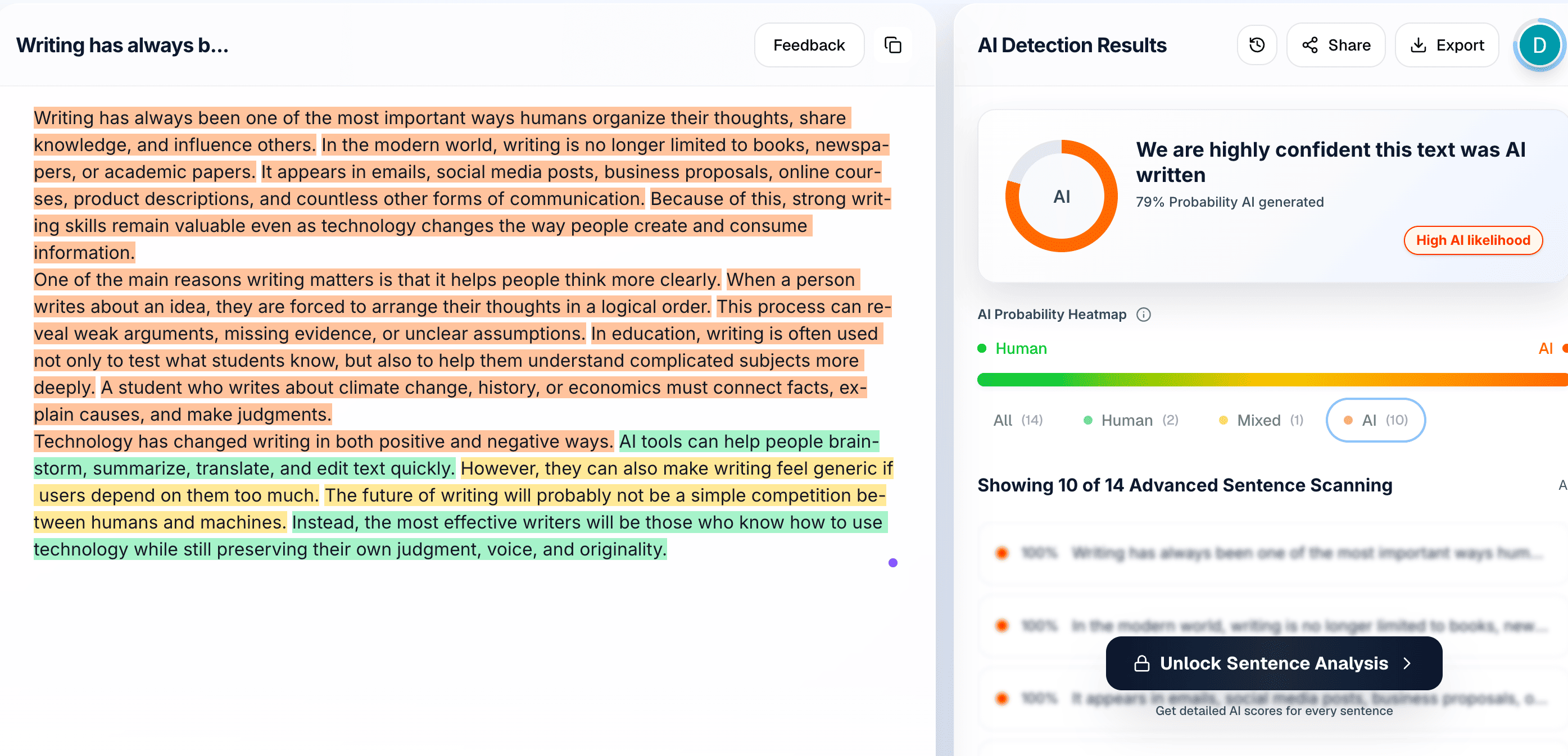
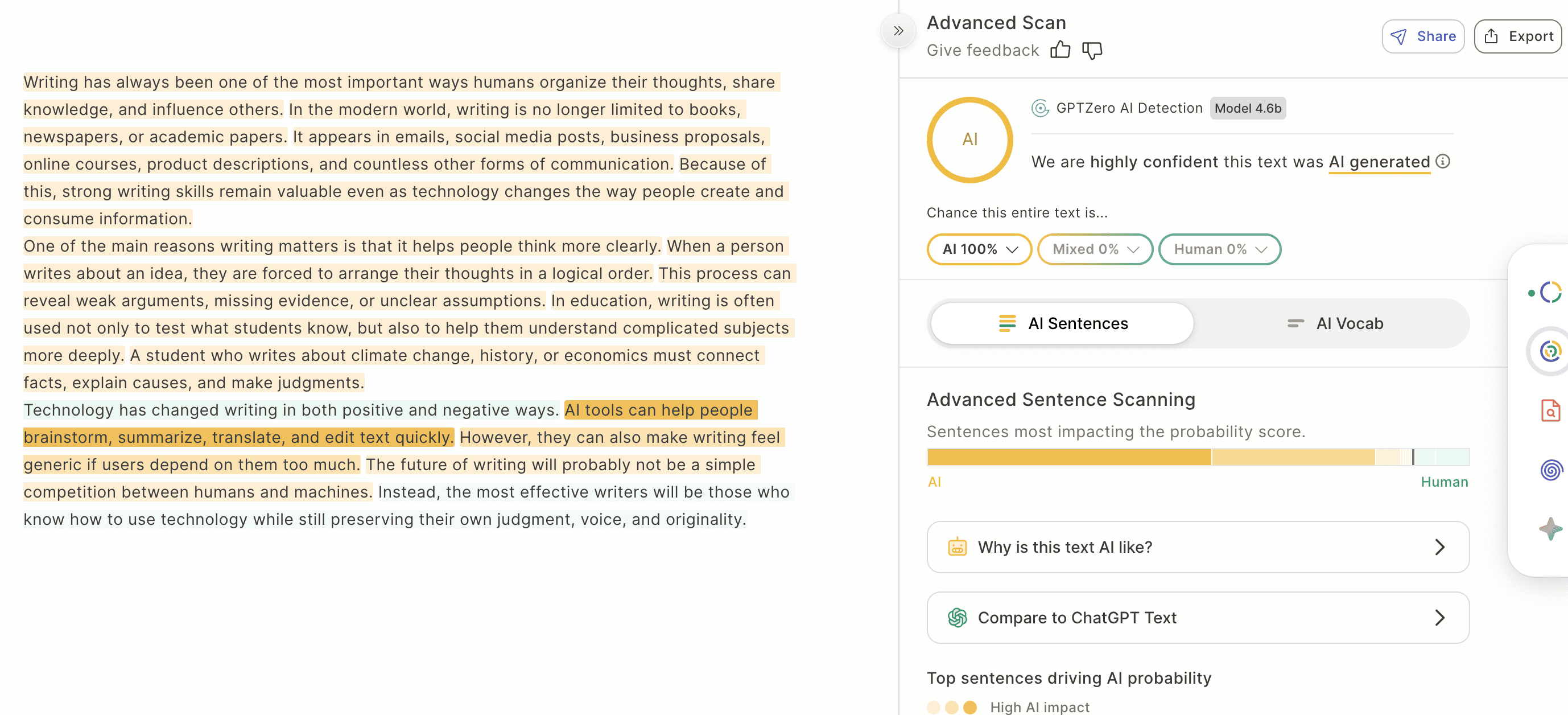
Verdict: This is the easy test, and Proofademic passes it. More importantly, it establishes a baseline before the review moves into more realistic cases.
Test 2: False Positive Check With Human-Written Text
The second test checks the opposite failure mode. An AI detector should not punish real human writing just because it is polished, structured, or professional. False positives are especially damaging in education and publishing because they can accuse a real writer without enough evidence.
| Detector | Test Input | Result Read |
|---|---|---|
| Proofademic | Human-written article | Rated as mostly human |
| GPTZero | Human-written article | Rated as mostly human |
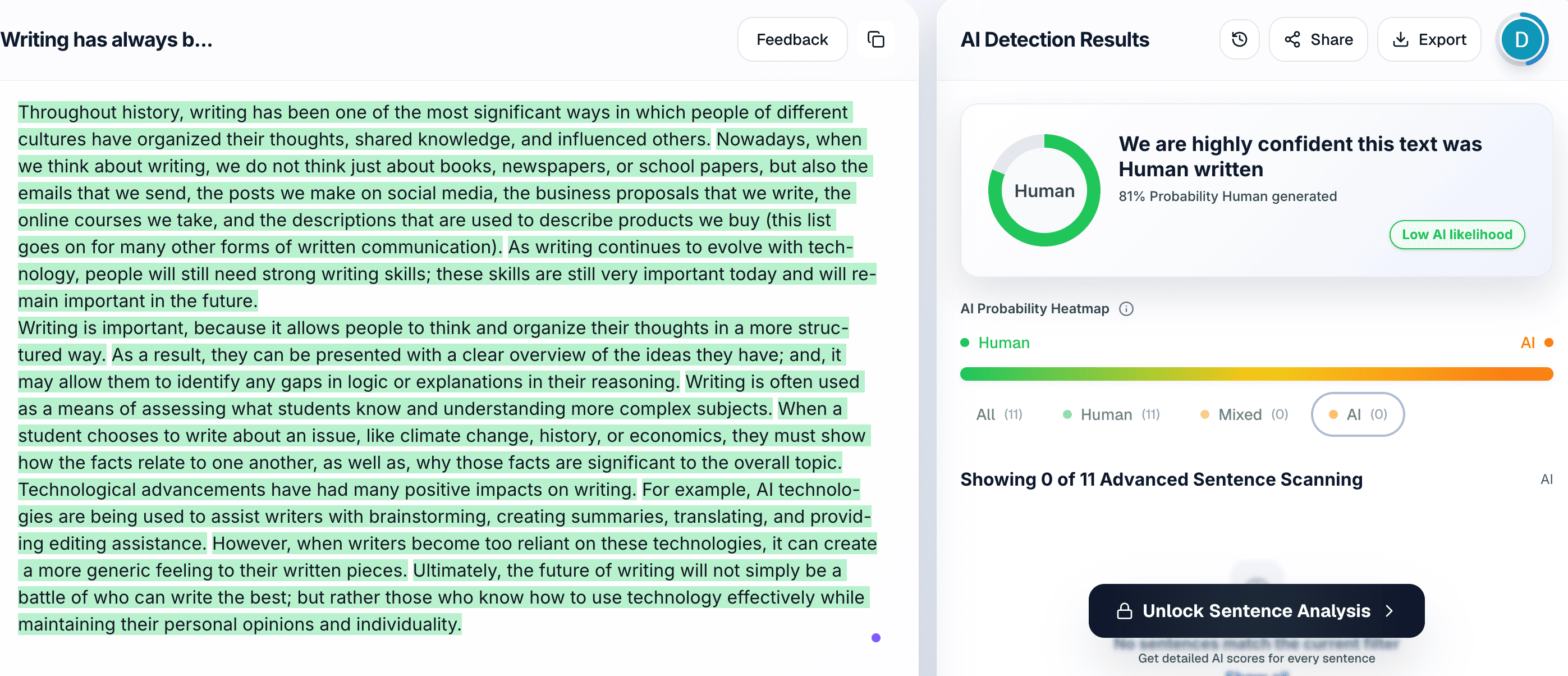
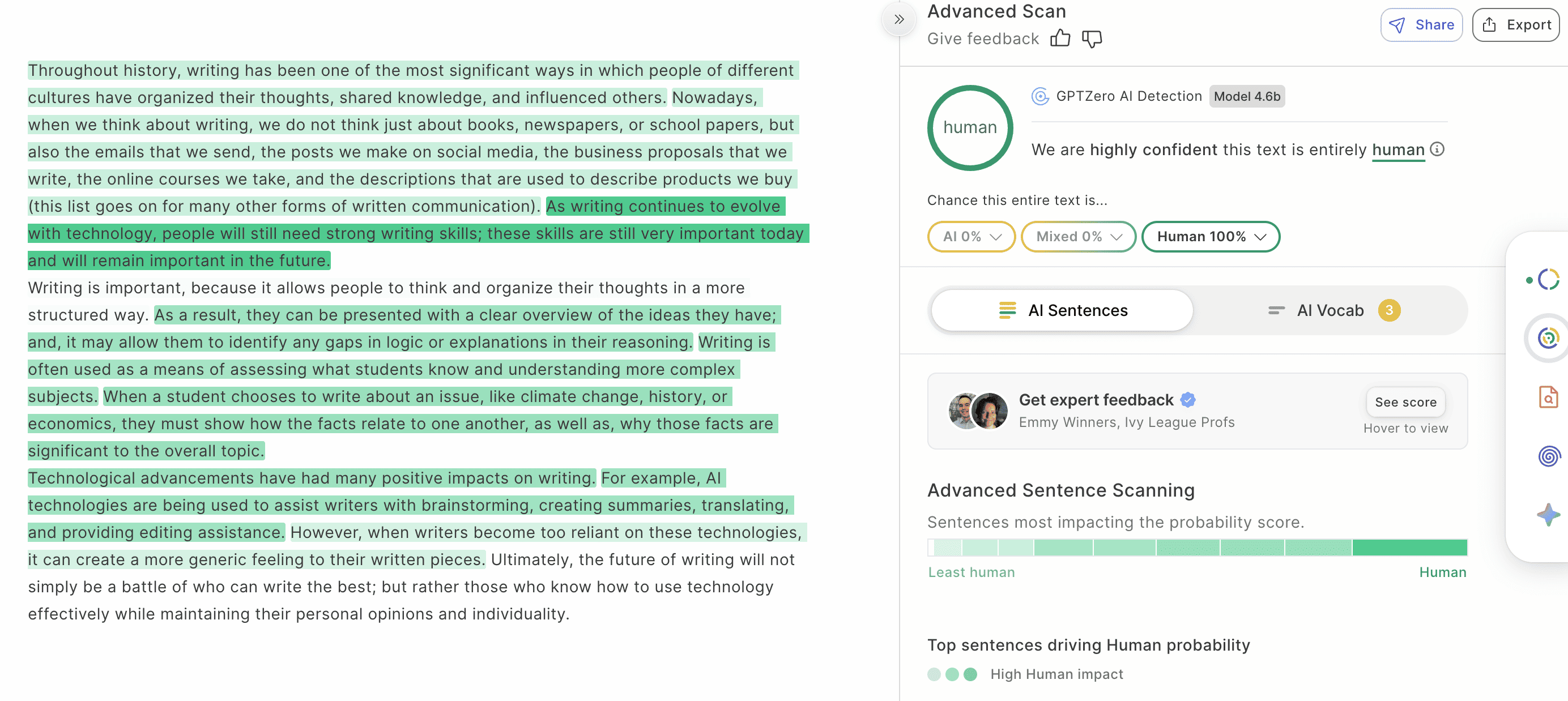
Verdict: Proofademic avoids the biggest false positive trap in this sample. That is a strong sign for reviewers who need to protect real writers while still detecting AI misuse.
Test 3: Ryter Pro Humanized AI Text
This is the most important test in the review. Raw AI detection is useful, but many users now run AI drafts through a humanizer before submitting them. For this test, the AI-generated essay was rewritten with Ryter Pro to humanize AI text, improve flow, and reduce obvious robotic phrasing.
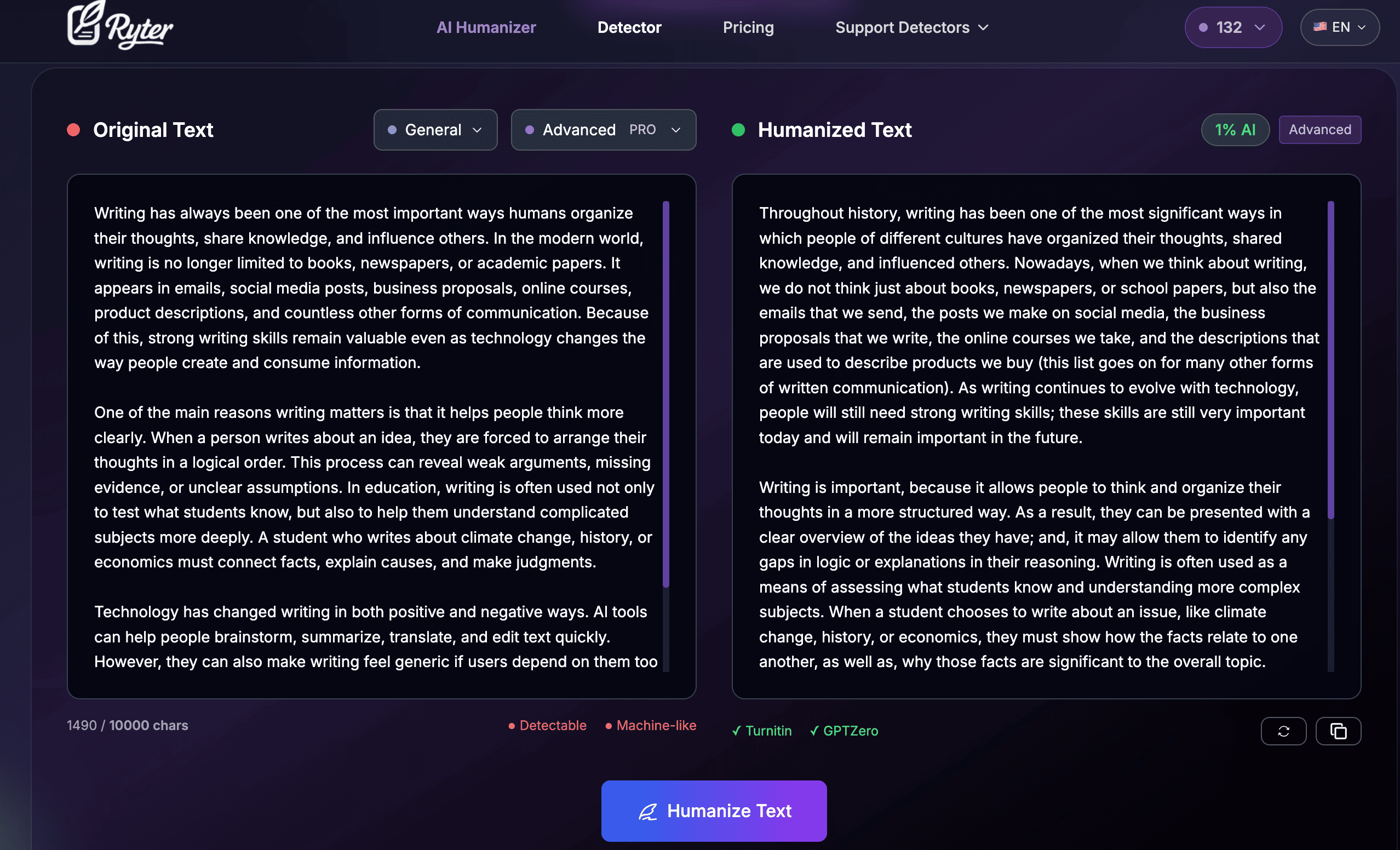
| Detector | Test Input | Result Read |
|---|---|---|
| Proofademic | Ryter Pro humanized AI text | Still found AI probability signals |
| GPTZero | Ryter Pro humanized AI text | Less explanatory detection result |
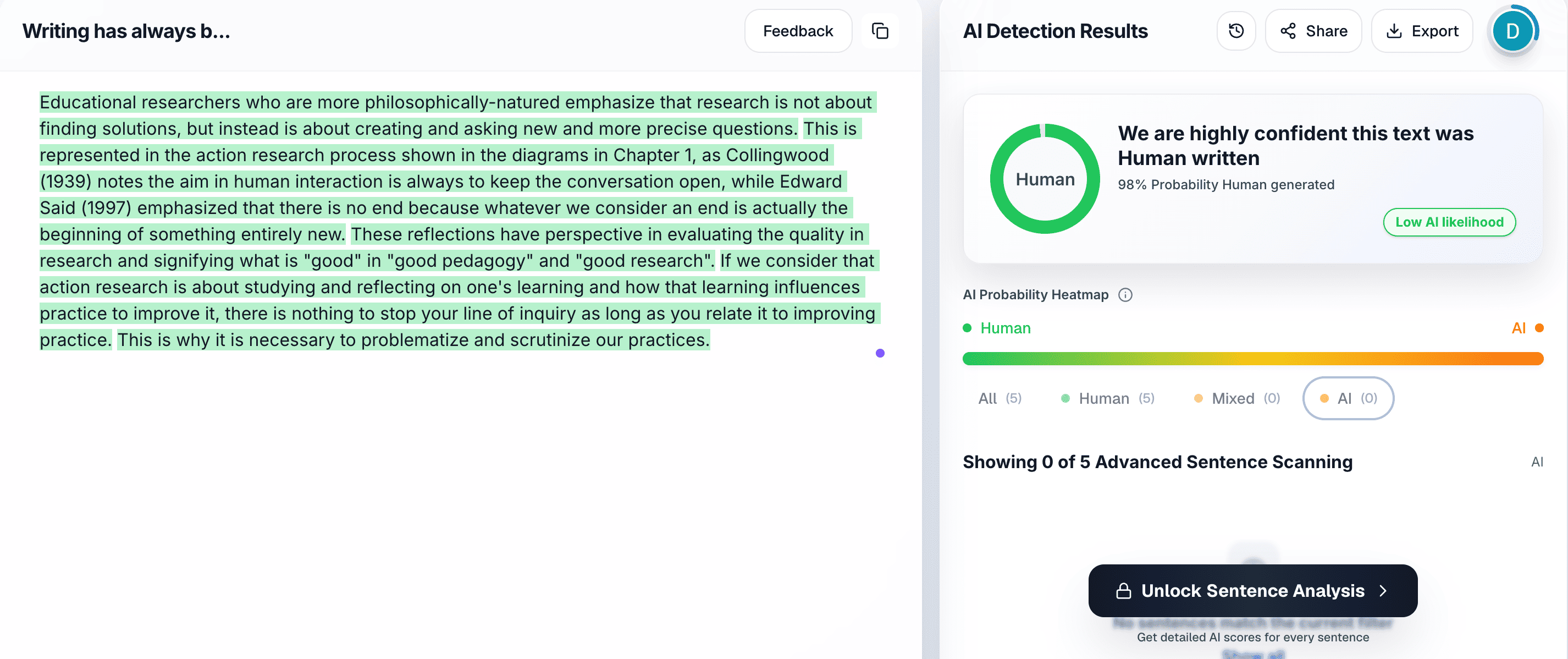
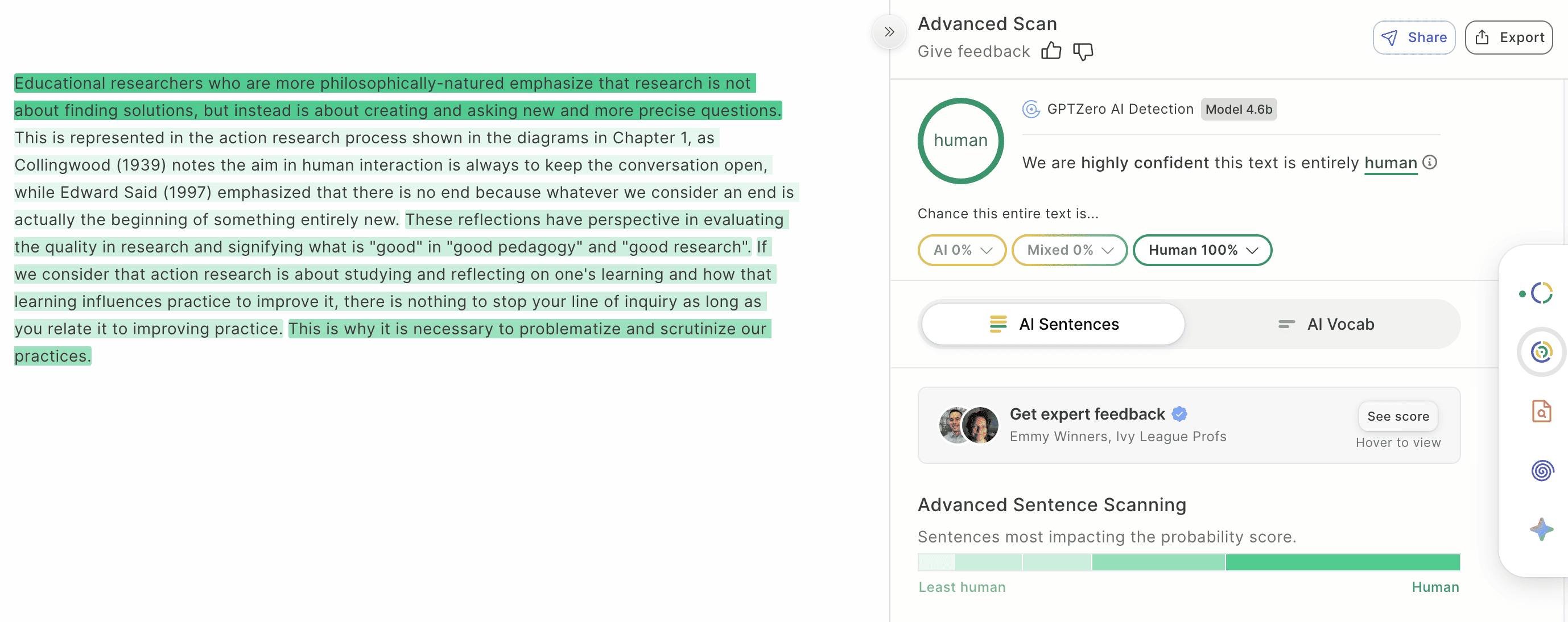
Verdict: This is where Proofademic becomes more useful than a basic detector. The value is not only the score. The useful part is the evidence layer: reviewers can inspect which sentences still look AI-like after humanization.
Test 4: ESL Student Essay
ESL writing is a fairness test. Many detectors can mistake unusual grammar, direct phrasing, or non-native sentence patterns for AI writing. A reliable detector should not punish a real student simply because their English does not sound native.
| Detector | Test Input | Result Read |
|---|---|---|
| Proofademic | ESL student essay | Identified as human-written |
| GPTZero | ESL student essay | Identified as human-written |
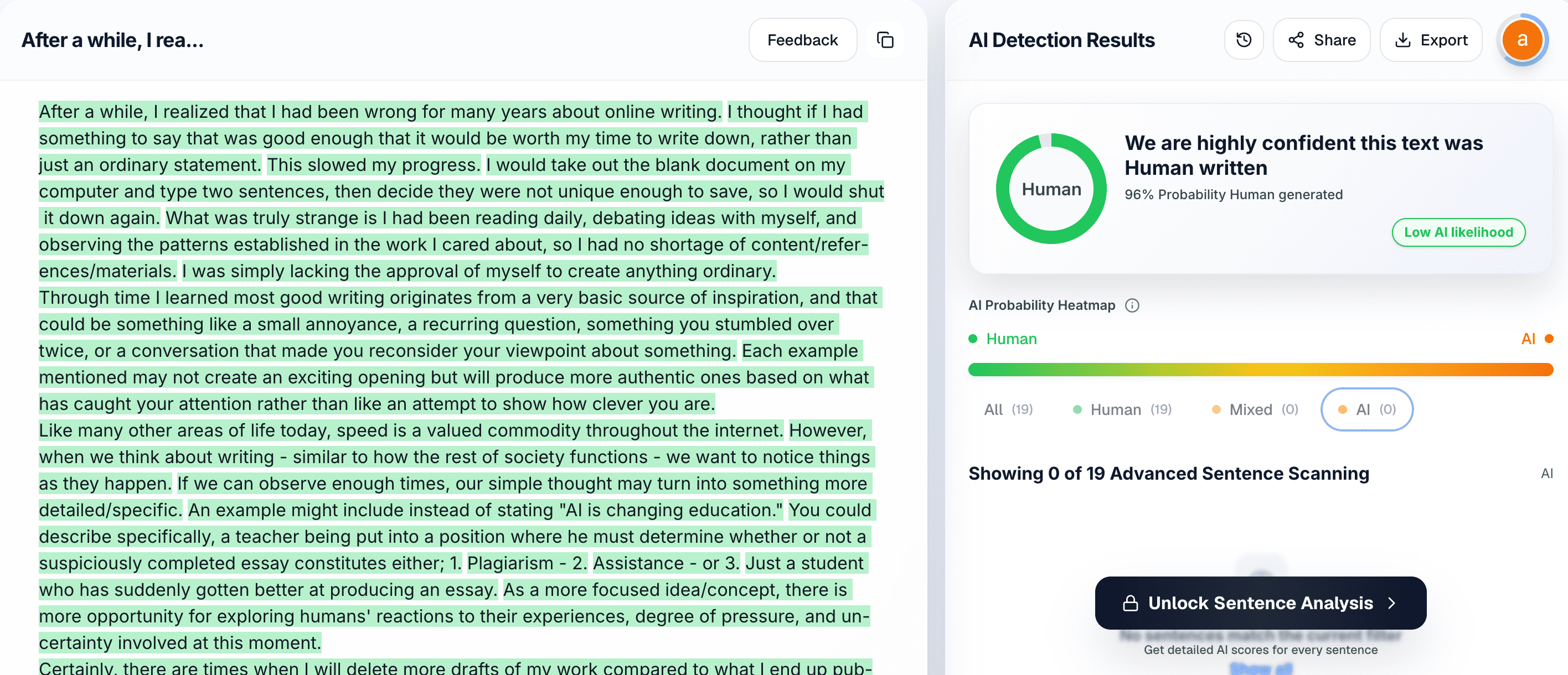
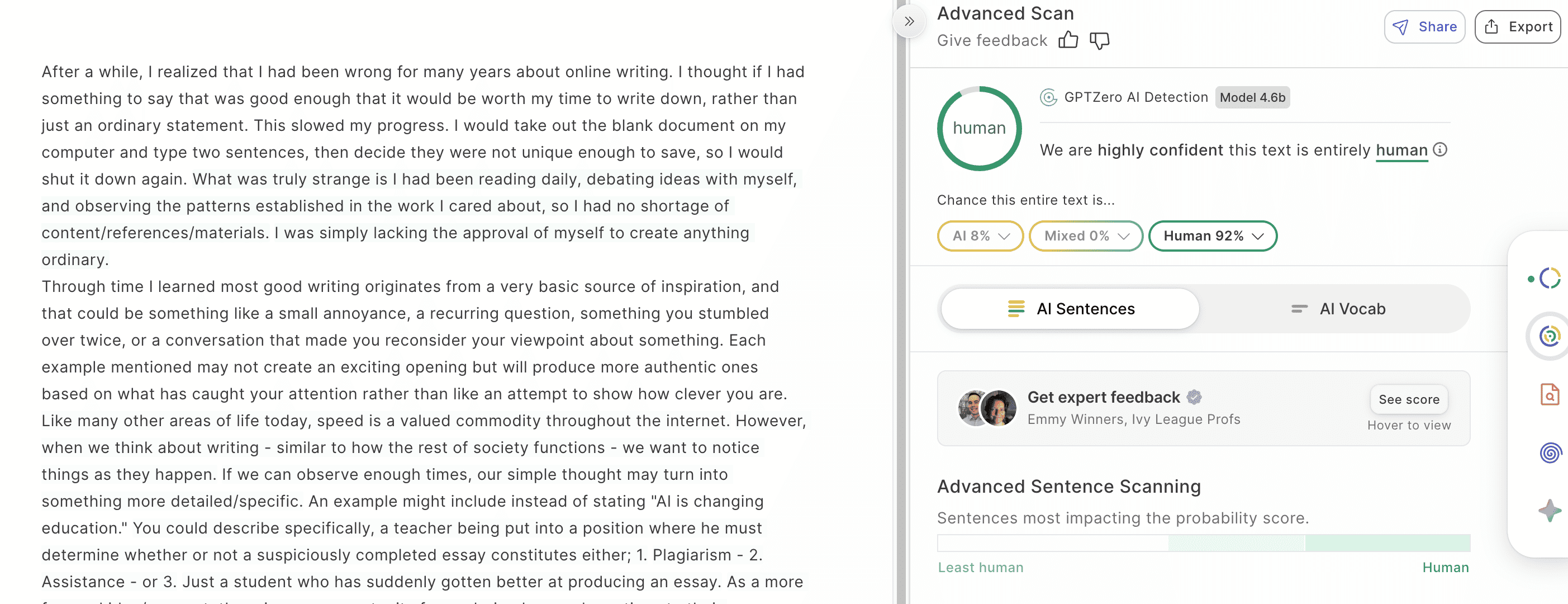
Verdict: Proofademic handles this sample fairly. That is important for schools and universities because false positives against ESL writers are one of the most serious risks in AI detection.
Test 5: Multilingual AI Detection
The final test uses an AI-generated German essay. Many AI detectors are strongest in English and less reliable in other languages. A professional detector should be able to handle multilingual content, especially for universities, global publishers, and international teams.
| Detector | Test Input | Result Read |
|---|---|---|
| Proofademic | German AI essay | Detected as AI-generated |
| GPTZero | German AI essay | Detected AI with weaker confidence |
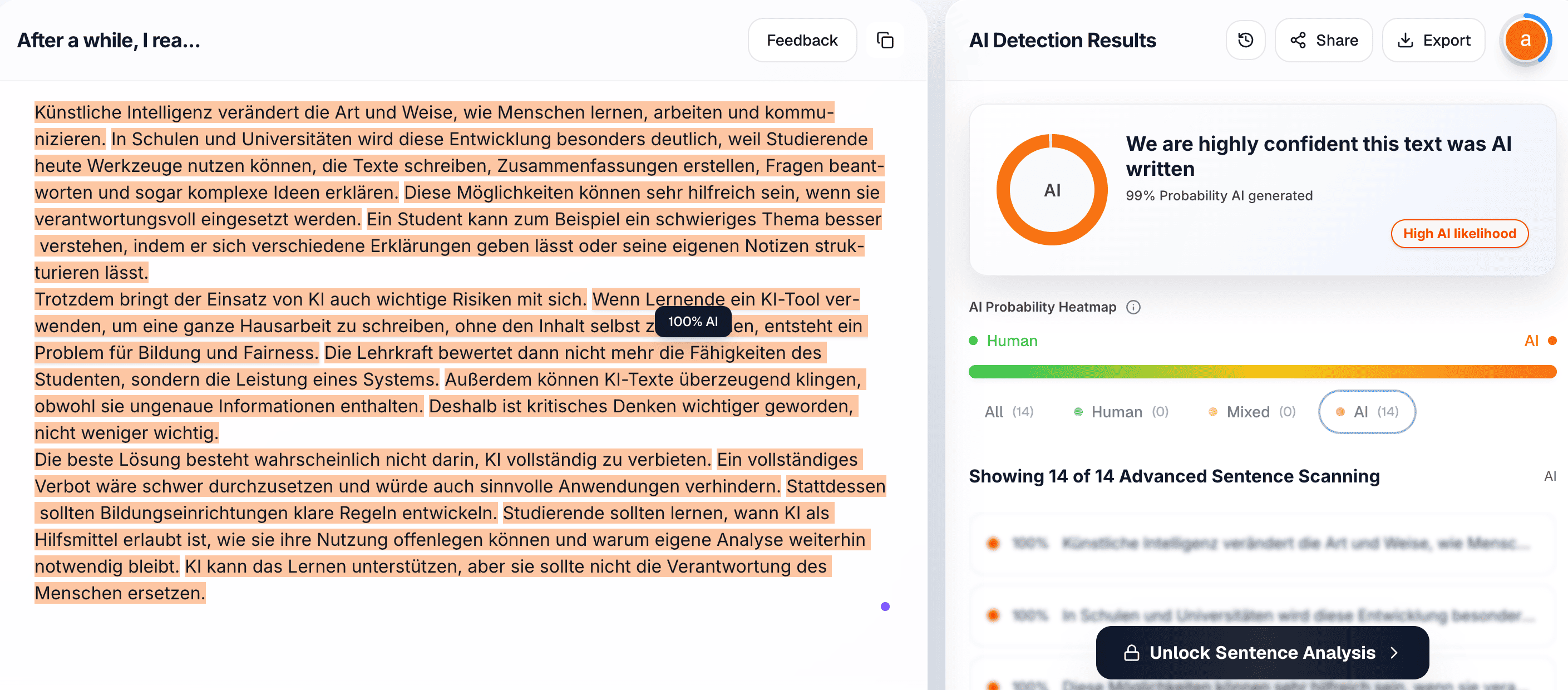
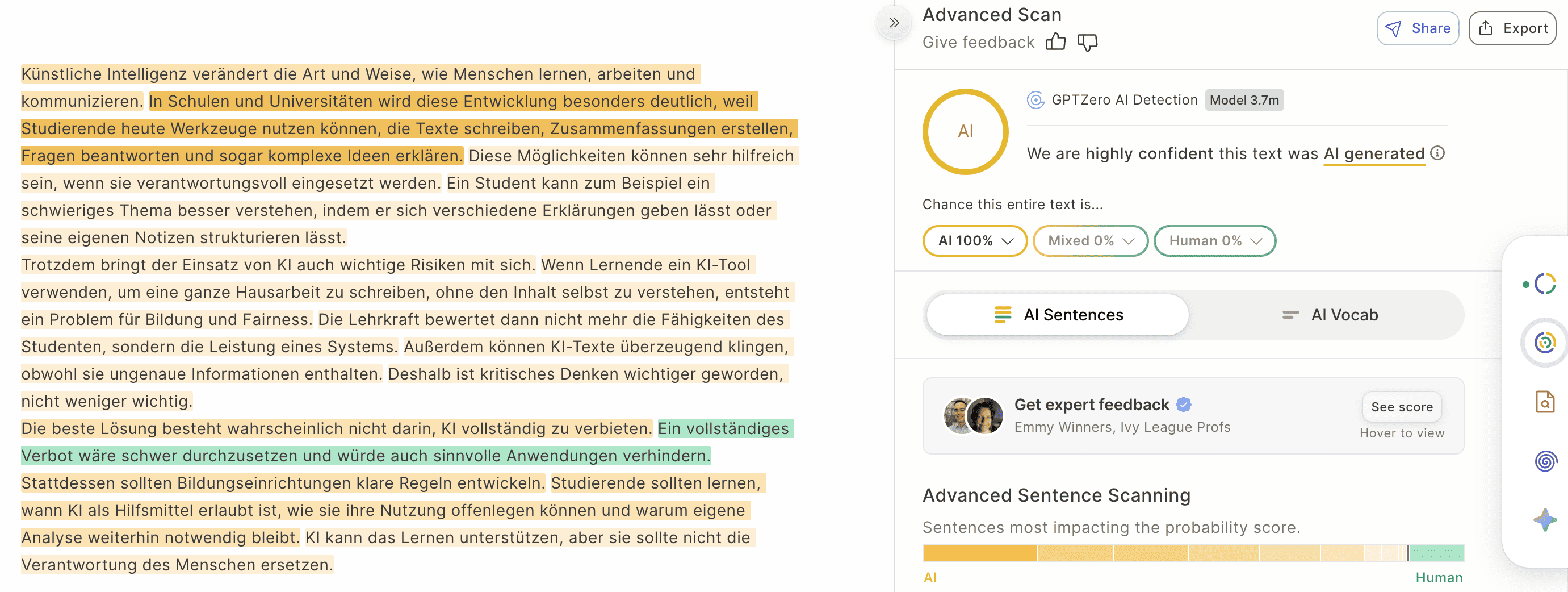
Verdict: Proofademic performs well in the multilingual test and is more convincing for international review workflows than detectors that are primarily optimized for English.
Results Summary
| Test | Content Type | Proofademic Read | Why It Matters |
|---|---|---|---|
| 1 | Raw ChatGPT Essay | Detected AI | Baseline accuracy |
| 2 | Human-Written Article | Mostly human | False positive control |
| 3 | Ryter Pro Humanized AI Text | AI signals remain visible | Humanizer resistance |
| 4 | ESL Student Essay | Human-written | Fairness for non-native writers |
| 5 | German AI Essay | Detected AI | Multilingual coverage |
Proofademic Features
Proofademic's strongest feature is transparency. A single AI probability score can be useful, but it is not enough when a reviewer needs to make a decision about a real submission. The heatmap gives reviewers a sentence-level view of what the model considers suspicious, which makes the review process easier to explain.

Most Useful Features
- Sentence-level heatmaps: useful for reviewing specific passages instead of judging the whole document blindly.
- Scan history: helpful for teams that need to review multiple documents over time.
- Professional dashboard: better suited for academic and editorial workflows than a simple paste-and-score tool.
- Multilingual support: important for global schools, publishers, and distributed content teams.
Pricing and Plans
Proofademic's pricing is positioned around detection and review. That makes sense if your main job is to evaluate submissions, but it is not the same use case as rewriting or improving content. If your goal is to humanize AI drafts, you need a writing tool. If your goal is to audit content, you need a detector.
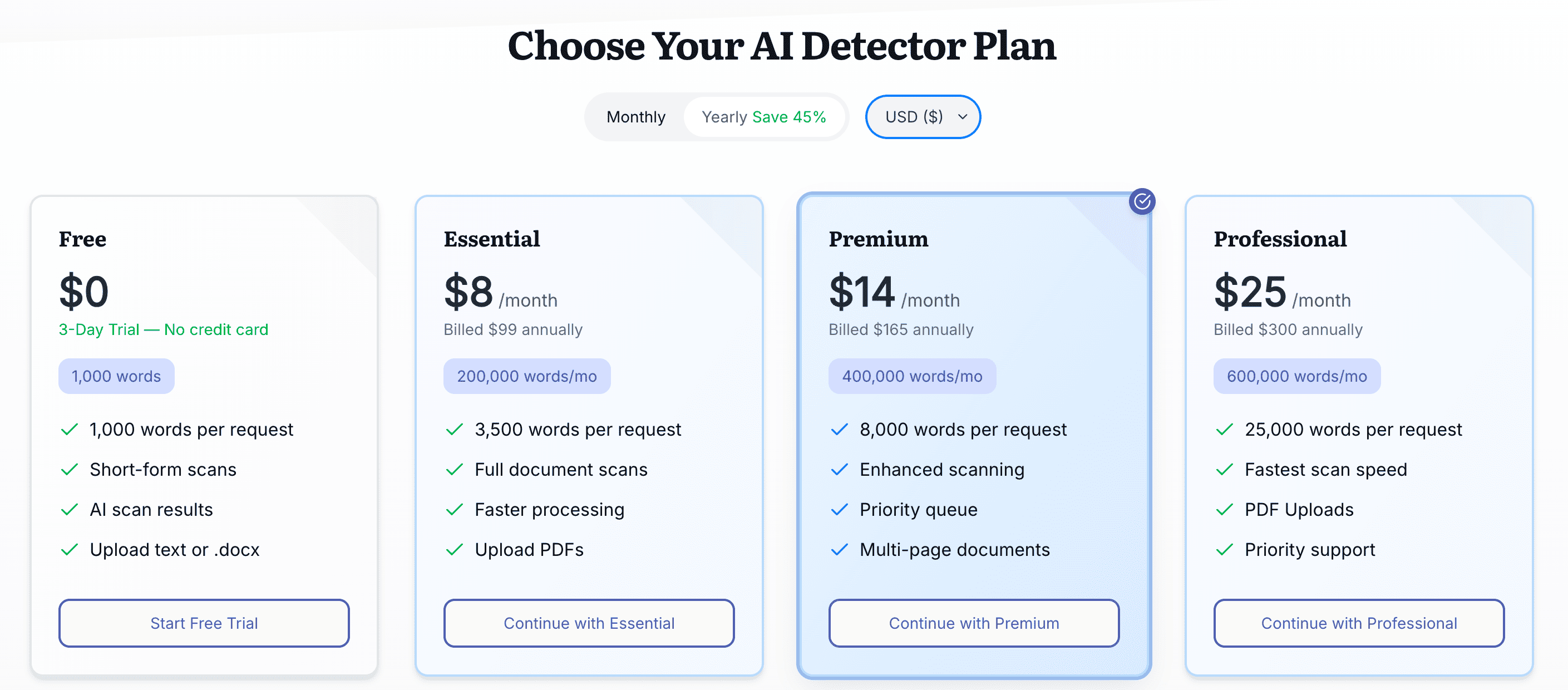
For users who need rewriting, editing, and humanization, Ryter Pro pricing is the better comparison point. Ryter Pro is built for improving drafts, while Proofademic is built for checking them.
Proofademic Pros and Cons
Pros
- Strong review-style interface for educators, editors, and content teams.
- Sentence-level heatmaps make the detection result easier to explain.
- Handles raw AI text and humanized AI text better than basic detectors.
- Useful false-positive and ESL performance in this benchmark structure.
- Multilingual detection makes it more practical for global workflows.
Cons
- It is a detector, not a writing improvement tool.
- Users still need human judgment before making academic or editorial decisions.
- Pricing value depends on how many documents you need to scan.
- Detector results should still be compared with context, source evidence, and writing history.
Proofademic vs Ryter Pro
Proofademic and Ryter Pro solve different problems. Proofademic is for detection. Ryter Pro is for rewriting and humanization. If you are an editor or teacher trying to evaluate suspicious submissions, Proofademic is the better fit. If you are a writer trying to improve an AI-assisted draft so it reads naturally, Ryter Pro is the better fit.
| Use Case | Best Fit | Reason |
|---|---|---|
| Detect AI content | Proofademic | Built for scoring and sentence-level evidence |
| Humanize AI text | Ryter Pro | Built for rewriting, tone, and readability |
| Review humanized AI | Proofademic | Can inspect whether AI-like signals remain |
| Improve a draft before publishing | Ryter Pro | Focuses on better writing, not only detection |
The strongest workflow is to use both categories correctly: use Ryter Pro to humanize and improve AI-assisted writing, then use a detector like Proofademic when you need evidence-based review.
Who Should Use Proofademic?
Proofademic is best for people who review writing rather than people who only produce writing. That includes teachers, editors, publishers, academic integrity teams, research supervisors, and content managers. Its biggest advantage is that it gives reviewers something to inspect instead of forcing them to trust a single number.
Writers can still learn from Proofademic results, but they should not treat any detector as the final judge of quality. A text can pass a detector and still be vague, generic, or badly argued. Strong writing still needs clarity, examples, structure, and human judgment.
FAQ
Is Proofademic accurate?
In this review structure, Proofademic performs well across raw AI text, human-written content, humanized AI, ESL writing, and multilingual AI content. Its biggest advantage is explainability through sentence-level evidence.
Can Proofademic detect humanized AI text?
Yes, that is the key reason it stands out. In the Ryter Pro humanized text test, Proofademic still provides sentence-level AI probability signals instead of only returning a simple pass or fail.
Is Proofademic better than GPTZero or ZeroGPT?
Proofademic is stronger when you need explainable review. Basic detectors can be useful for quick checks, but Proofademic's heatmap and professional workflow make it more practical for serious review decisions.
Is Ryter Pro a Proofademic alternative?
Not exactly. Ryter Pro is an AI humanizer and writing improvement tool, while Proofademic is an AI detector. They are best used for different stages of the workflow.
Should one AI detector decide academic misconduct?
No. AI detectors should support review, not replace judgment. Schools and editors should combine detector evidence with writing history, drafts, assignment context, and human review.
Summary
Proofademic is one of the more convincing AI detectors for 2026 because it focuses on evidence, not only scoring. The five-test benchmark shows why that matters: raw AI text is easy, but humanized AI, ESL writing, false positives, and multilingual content are where many detectors become unreliable.
If you need to evaluate suspicious writing, Proofademic is worth testing. If you need to rewrite and humanize AI text before publishing, Ryter Pro is the better tool. The most practical workflow is simple: improve the draft with Ryter Pro, then review high-stakes content with a transparent detector like Proofademic.