


Publishing in Nature, one of the world's most prestigious scientific journals, represents a career milestone for researchers. Understanding how to write a Nature paper requires mastering not just scientific rigor but also the specific formatting, style, and presentation standards that distinguish high-impact publications. This comprehensive guide walks you through every step of crafting a manuscript worthy of Nature's exacting standards.
Understanding Nature's Publication Standards
Before learning how to write a Nature paper, you must understand what makes Nature unique. Nature publishes groundbreaking research with broad significance across scientific disciplines. The journal's acceptance rate hovers around 8%, making it one of the most selective publications in science.
Nature papers share common characteristics:
- Exceptional novelty: Your research must present genuinely new findings that advance scientific understanding
- Broad significance: Results should interest researchers beyond your immediate specialty
- Rigorous methodology: Experimental design and statistical analysis must be impeccable
- Clear presentation: Complex findings must be accessible to Nature's interdisciplinary readership
- Concise writing: Nature papers are typically 2,000-3,000 words, requiring exceptional clarity
When you learn how to write a Nature paper, you're mastering the art of communicating complex science with precision and impact.
Essential Structure: How to Write a Nature Paper
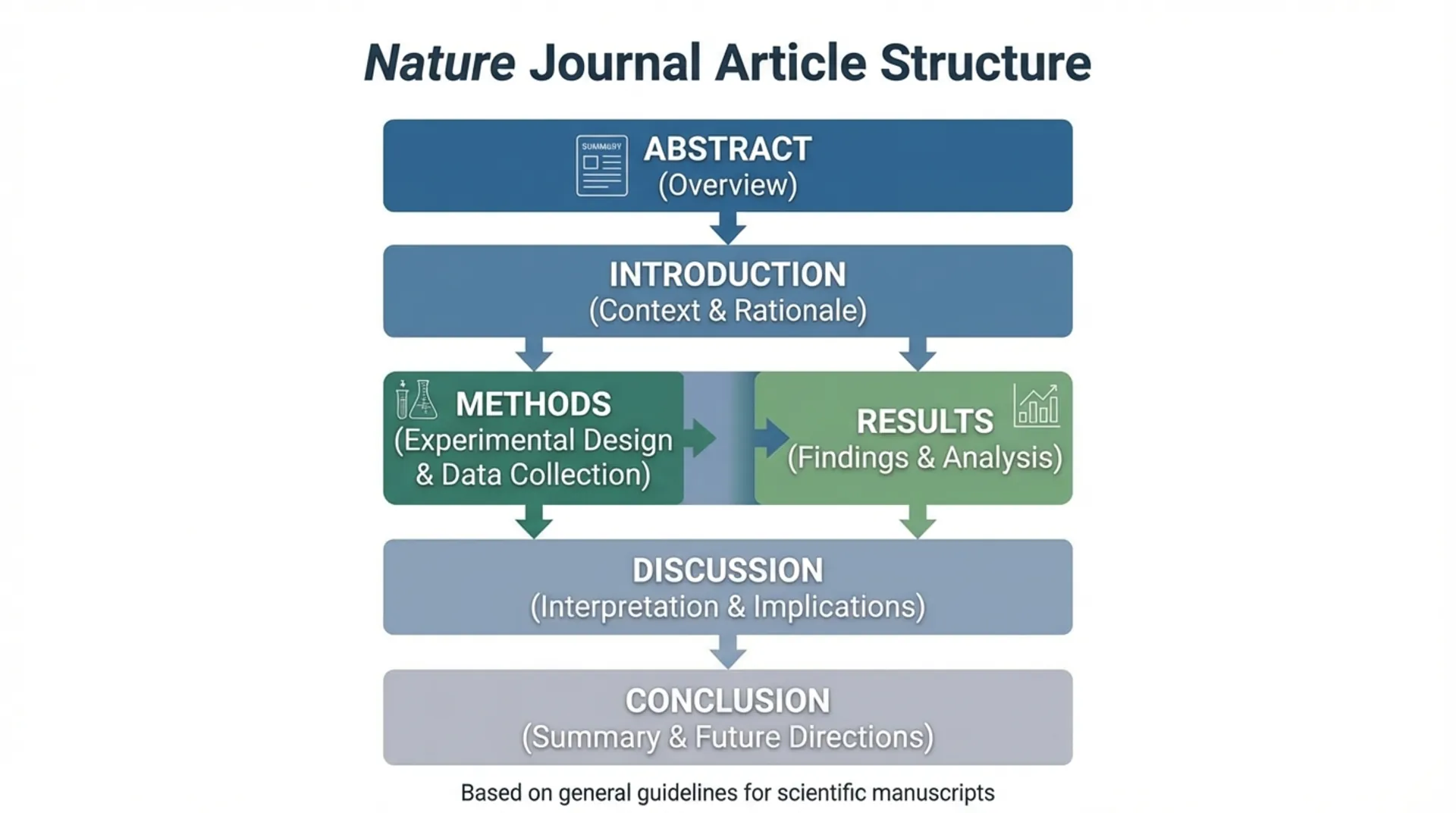
Nature papers follow a specific structure that differs from standard academic formats. Understanding this structure is fundamental to knowing how to write a Nature paper successfully.
Title and Abstract
Your title should be concise (typically under 90 characters) yet informative. Avoid jargon and abbreviations. The abstract, limited to 150-200 words, must summarize your entire study: background, methods, key findings, and implications. When considering how to write a Nature paper, remember that many readers will only see your abstract—make every word count.
Introduction
Nature introductions are brief (typically 2-3 paragraphs) and focus on establishing why your research matters. Start with the broader context, narrow to the specific problem, and conclude by stating your approach and key findings. This section should answer: Why should anyone care about this research?
Results
Present your findings logically, using figures and tables to convey complex data. Nature emphasizes visual communication—your figures should tell the story even without reading the text. When learning how to write a Nature paper, invest significant effort in creating clear, publication-quality figures.
Discussion
Interpret your results, place them in broader context, acknowledge limitations, and suggest future directions. Nature discussions are concise and focused on significance rather than exhaustive literature review.
Methods
Nature places detailed methods at the end, allowing the main narrative to flow without technical interruptions. Methods must be comprehensive enough for replication but can reference supplementary materials for extensive protocols.
Writing Style: Mastering How to Write a Nature Paper
Nature's writing style is distinctive. Understanding these stylistic elements is crucial when learning how to write a Nature paper:
Active voice: Use active constructions whenever possible. "We measured" rather than "Measurements were taken."
Present tense for established facts: "DNA consists of four nucleotides" but past tense for your specific findings: "We observed increased expression."
Precision without jargon: Be technically accurate but accessible to non-specialists. Define specialized terms on first use.
Conciseness: Every sentence must earn its place. When you understand how to write a Nature paper, you learn to convey maximum information with minimum words.
Logical flow: Each paragraph should connect naturally to the next, building a coherent narrative from introduction through discussion.
Common Mistakes When Learning How to Write a Nature Paper
Even experienced researchers make errors when attempting to publish in Nature. Avoid these common pitfalls:
Overselling results: Nature editors quickly spot exaggerated claims. Present findings confidently but accurately.
Insufficient novelty: Incremental advances rarely merit Nature publication. Your work must represent a significant leap forward.
Poor figure quality: Low-resolution images, unclear labels, or overly complex figures will sink your submission. Professional figure preparation is essential when learning how to write a Nature paper.
Inadequate statistical analysis: Nature requires rigorous statistics with appropriate controls and replication. Consult statisticians early in your research.
Ignoring formatting guidelines: Nature has specific requirements for references, figures, and supplementary materials. Follow them precisely.
Weak writing: Even brilliant science can be rejected for poor presentation. Consider using professional editing services like Ryter Pro to polish your manuscript before submission.
The Submission Process: How to Write a Nature Paper That Gets Accepted
Understanding how to write a Nature paper extends beyond the manuscript itself to the submission process:
Pre-submission Inquiry
Nature offers a pre-submission inquiry system where you can submit a brief summary (200 words) of your work. Editors provide feedback on whether your research fits Nature's scope, potentially saving months of preparation.
Cover Letter
Your cover letter should concisely explain why your work merits publication in Nature. Highlight the novelty, significance, and broad appeal. Suggest potential reviewers and declare any conflicts of interest.
Supplementary Materials
Nature papers typically include extensive supplementary information: additional figures, detailed methods, supplementary tables, and supporting data. Organize these materials clearly and reference them appropriately in the main text.
Peer Review
If your paper passes initial editorial screening, it enters peer review. Nature's review process is rigorous, often requiring substantial revisions. Respond to reviewer comments thoroughly and professionally. Understanding how to write a Nature paper includes mastering the revision process.
Tools and Resources for Writing Nature Papers
Several tools can help you master how to write a Nature paper:
Reference management: Use tools like EndNote or Mendeley to manage citations in Nature's specific format.
Figure preparation: Software like Adobe Illustrator or BioRender helps create publication-quality figures meeting Nature's technical specifications.
Writing assistance: Platforms like Ryter Pro offer AI-powered writing tools that can help refine your prose, check for clarity, and ensure your writing meets academic standards.
Statistical software: R, Python, or specialized packages ensure your statistical analyses meet Nature's rigorous standards.
Collaboration tools: Platforms like Overleaf facilitate collaborative writing with co-authors across institutions.
Frequently Asked Questions About How to Write a Nature Paper
How long does it take to write a Nature paper?
Writing a Nature paper typically takes 2-6 months from first draft to submission, depending on the complexity of your research and the number of co-authors. This includes multiple revision rounds, figure preparation, and supplementary material compilation. Understanding how to write a Nature paper efficiently can reduce this timeline, but rushing compromises quality.
What is the typical length of a Nature paper?
Nature papers are typically 2,000-3,000 words for the main text, excluding abstract, references, and methods. This word limit forces exceptional conciseness. When learning how to write a Nature paper, practice conveying complex ideas succinctly without sacrificing clarity or accuracy.
Can I submit to Nature if English is not my first language?
Yes, but your manuscript must meet Nature's high language standards. Non-native English speakers should consider professional editing services. Tools like Ryter Pro can help refine academic English, ensuring your science shines through clear, professional prose. Many successful Nature authors are non-native English speakers who invest in language polishing.
What happens if my Nature paper is rejected?
Nature rejects approximately 92% of submissions, often without external review. Rejection doesn't necessarily reflect poor science—your work may simply not fit Nature's specific criteria. Editors sometimes suggest alternative Nature journals (Nature Communications, Scientific Reports) that might be more appropriate. Use reviewer feedback to strengthen your manuscript before submitting elsewhere.
How important are figures in a Nature paper?
Figures are crucial. Nature papers are highly visual, with figures often conveying more information than text. Invest significant time in figure design, ensuring they're clear, accurate, and visually appealing. When mastering how to write a Nature paper, remember that poor figures can doom an otherwise excellent manuscript. Nature provides detailed figure guidelines—follow them meticulously.
Advanced Tips for Nature Paper Success
Beyond the basics of how to write a Nature paper, consider these advanced strategies:
Study published Nature papers in your field: Analyze their structure, writing style, and figure presentation. This provides concrete models for your own work.
Seek feedback early: Share drafts with colleagues, especially those who've published in high-impact journals. External perspectives identify weaknesses you might miss.
Prepare for rejection: Even excellent papers face rejection. Have a backup plan for alternative journals, and use rejection feedback constructively.
Build relationships with editors: Attend conferences where Nature editors present. Understanding their perspective helps you align your submission with their priorities.
Focus on storytelling: Great Nature papers tell compelling scientific stories. Structure your manuscript as a narrative with clear beginning, middle, and end.
Conclusion: Mastering How to Write a Nature Paper
Learning how to write a Nature paper is a career-long process that combines scientific excellence with exceptional communication skills. Success requires groundbreaking research, meticulous methodology, clear writing, and professional presentation. While the standards are demanding, publication in Nature represents one of science's highest achievements.
Remember that even rejected papers often find homes in excellent journals. The skills you develop learning how to write a Nature paper—concise writing, clear figure design, logical organization—benefit all your scientific communication.
Whether you're preparing your first Nature submission or refining your approach after previous attempts, invest in every aspect of your manuscript. Use available resources, from statistical consultants to professional editing services like Ryter Pro, to ensure your science receives the presentation it deserves.
The journey to Nature publication is challenging but rewarding. With persistence, attention to detail, and commitment to excellence, you can master how to write a Nature paper and contribute to the world's most prestigious scientific conversation.